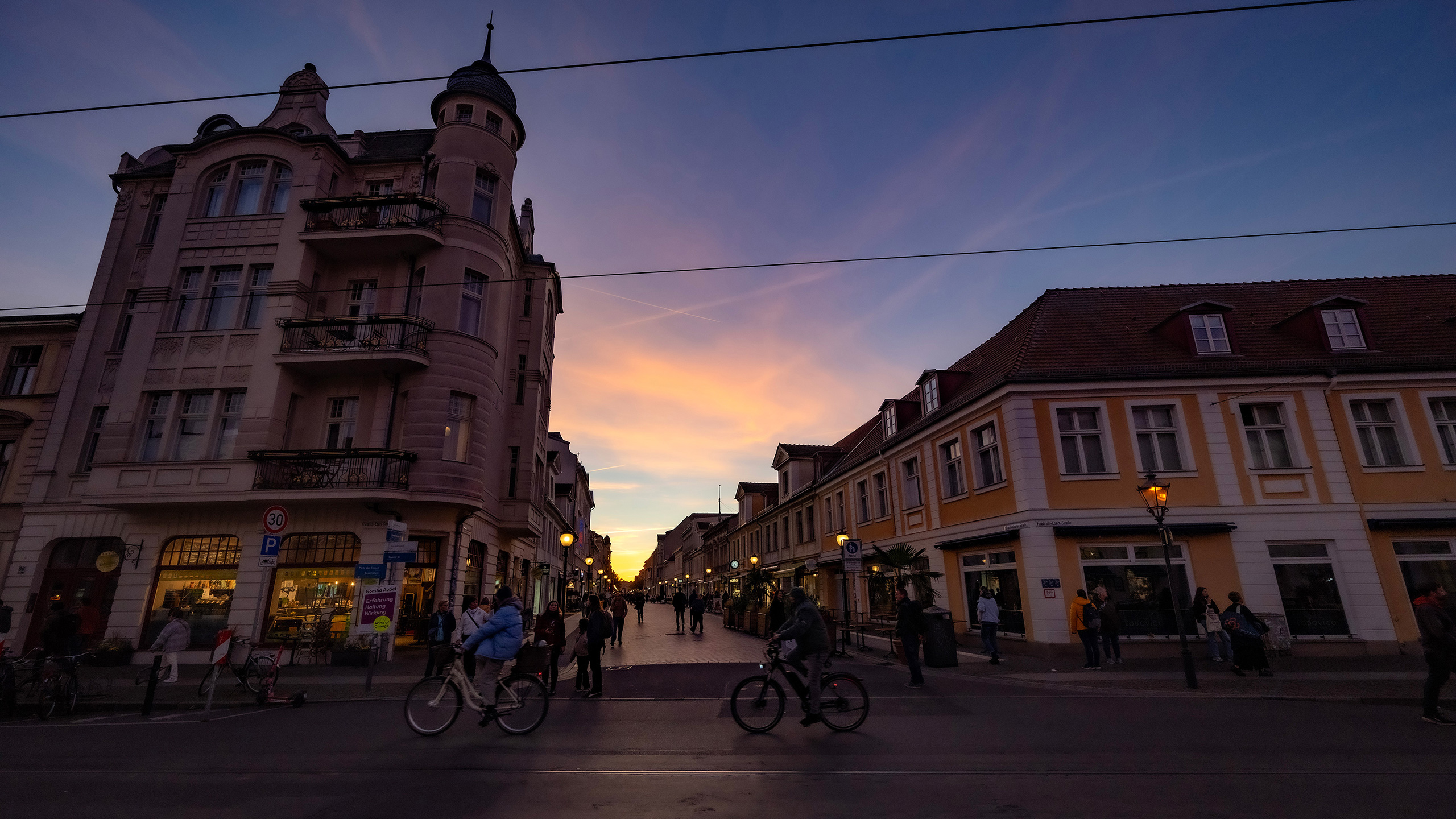
Connection
Without connections, communities would never form. Yes, people may live in close proximity to one another, but without places that provide easy opportunities for heretofore strangers to make comfortable eye contact in a setting that leads to conversations, they remain strangers even if living or working nearby.
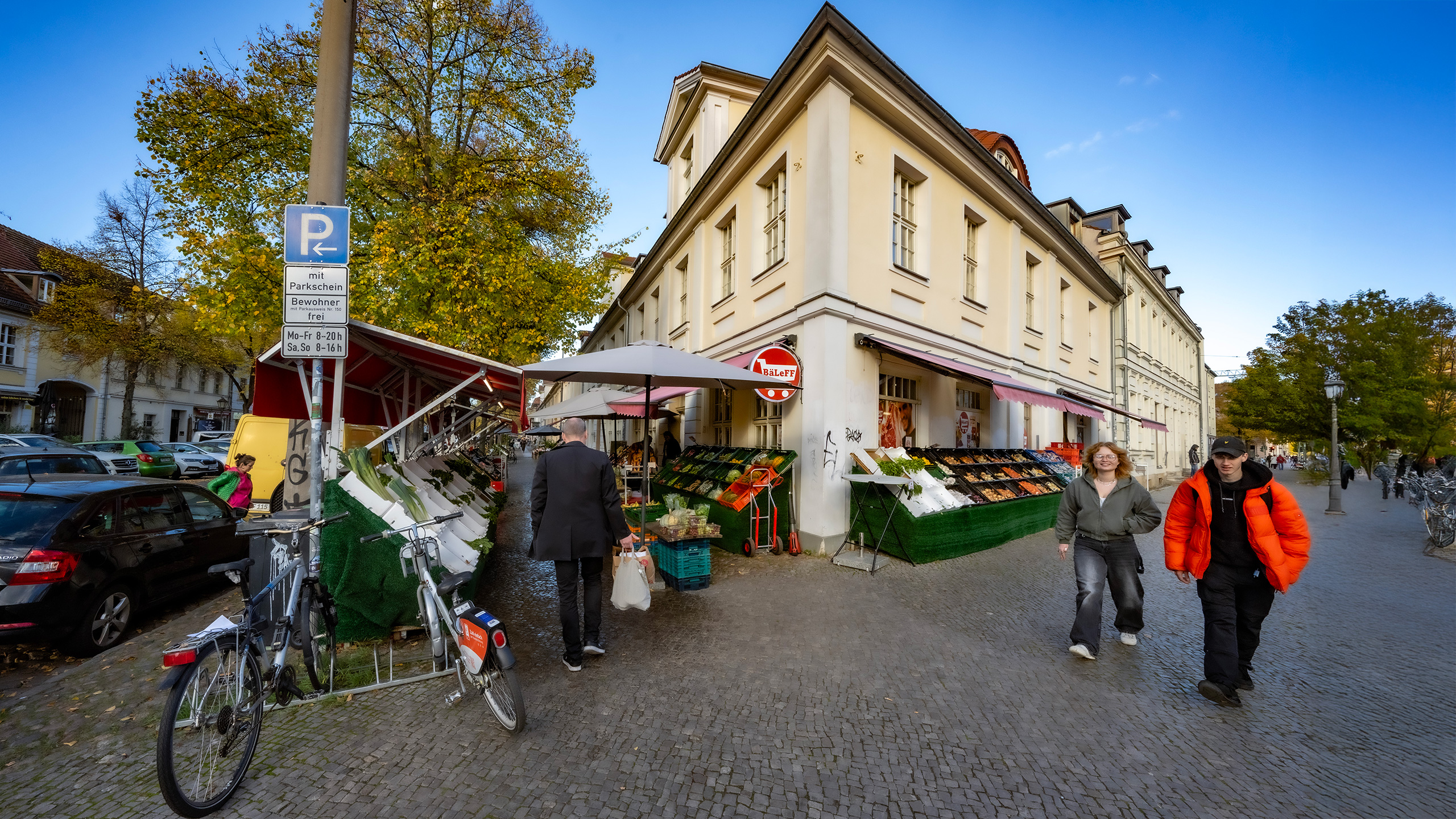
Most of the images on this page are from Potsdam, Germany, a small but excellent city near Berlin. Potsdam is a textbook case of connection conditions and opportunities.
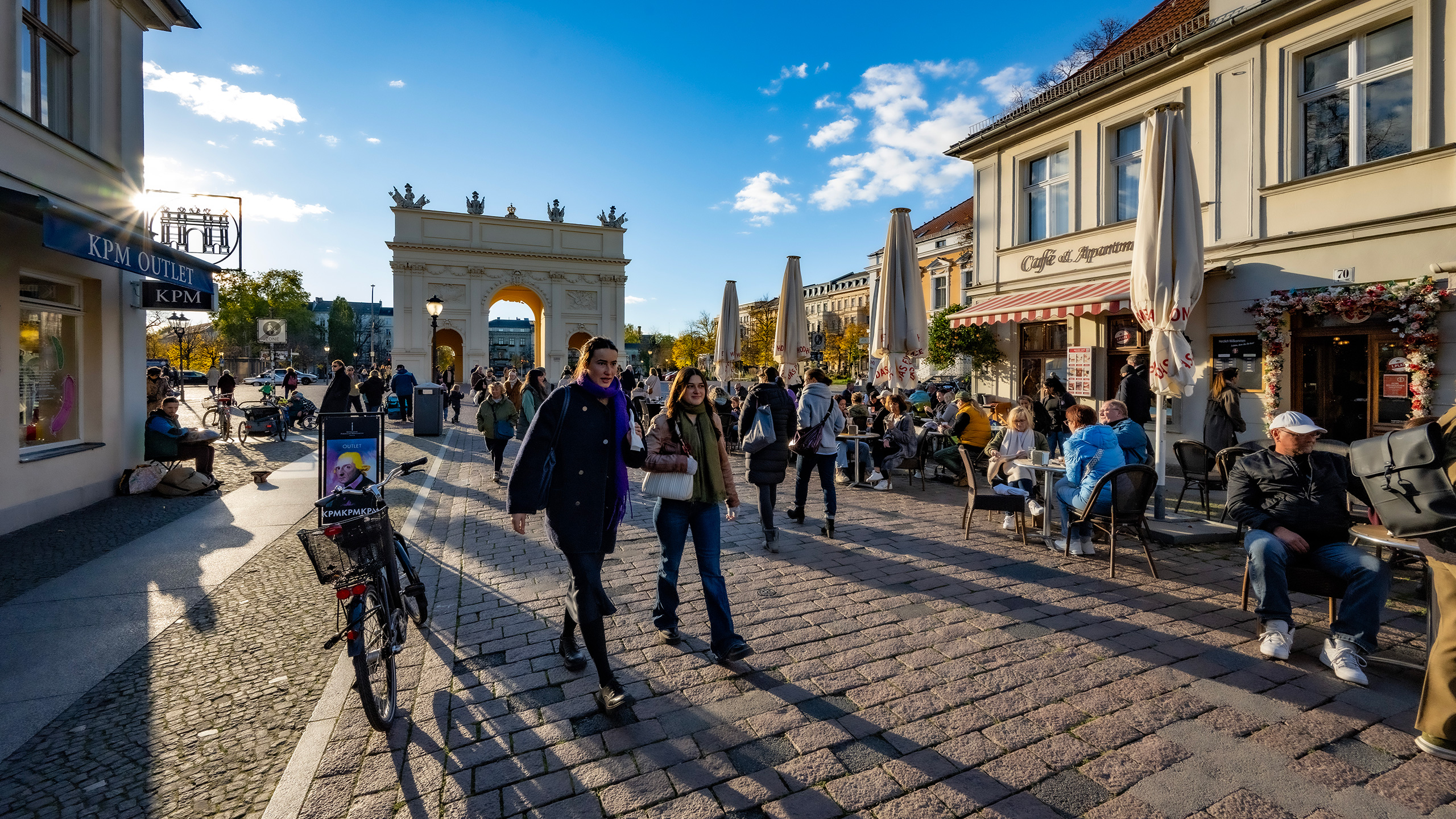
Connection Principles
A place that fosters connections is not like a dating service that actively connects people. Instead, it is a place that sets the stage for humans, a social species, to do what humans do, which is first to make eye contact, then to possibly start a conversation which can then lead to relationships if the conversations are interesting enough and fulfill needs in some way.
It's important to note that setting the stage is mostly about geometry as illustrated in this post about two people who were previously strangers meeting for the first time because the stage was set for them to get acquainted.
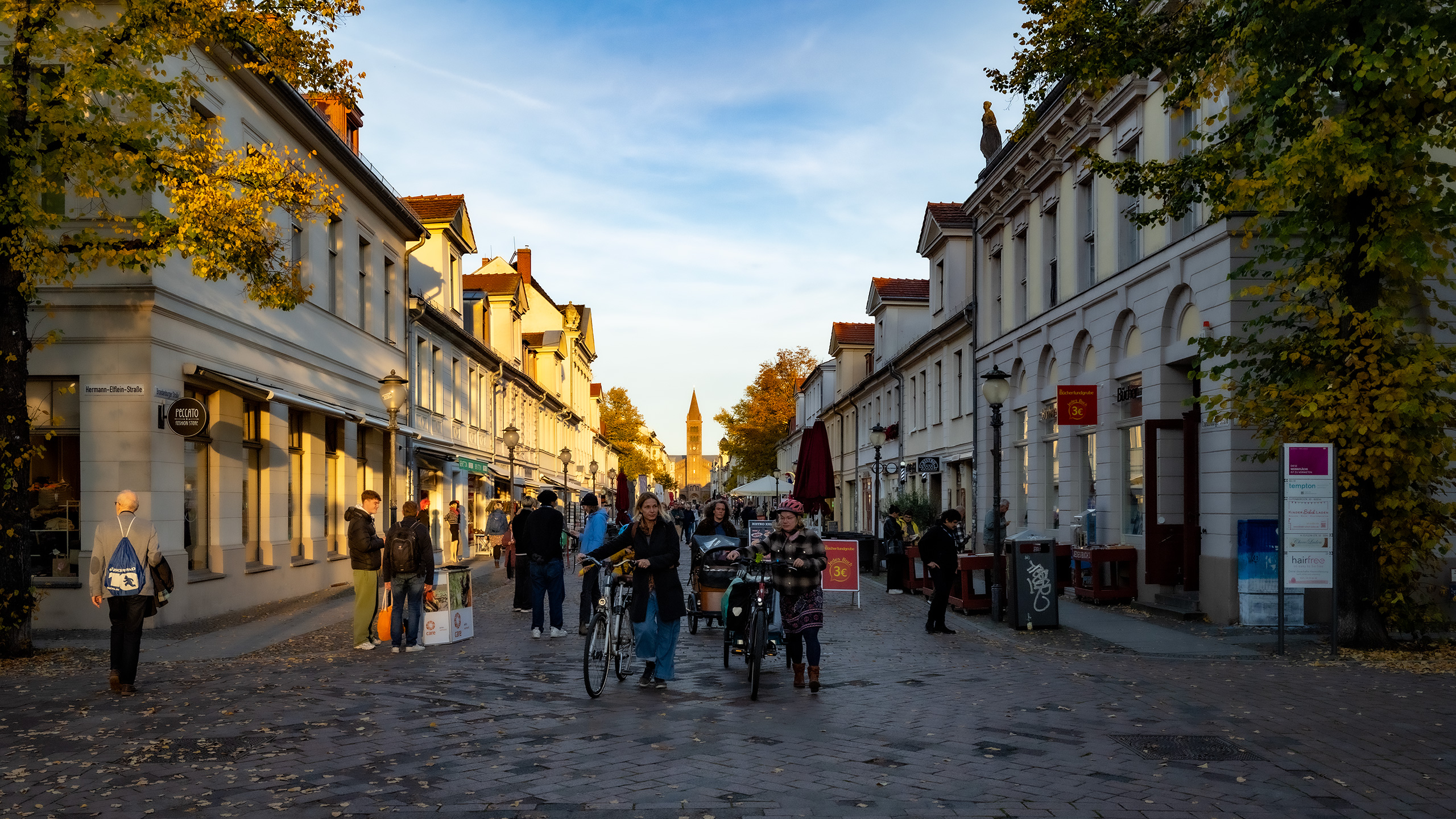
Places That Love People
I was introduced to this term recently; it sounded backwards the first time I heard it, but is fascinating in its implications, so please bear with me. The first mention of love on this site was in the very first blog post in April 2008, which closed with this: "If it can’t be loved, it won’t last."
The "idea honeymoon" didn't last long. I presented the Original Green shortly thereafter and one of the founders of the New Urbanism was there. He told me afterward "Steve, you're embarrassing yourself with the term 'lovable buildings'; no other architect in the country could say that with a straight face." I have great respect for him, but ignored that advice.
A few years later, the President of the Congress for the New Urbanism proposed "Building Places People Love" as the new CNU tagline. I was delighted and honored, and it remains on the CNU website to this day.
So how does it work if we flip that equation? How can a place made up of things like buildings, thoroughfares, and civic spaces that aren't alive be capable of love? Isn't love something humans and other creatures do, not the things they've created?
Yes, but let's think about gifts. A gift can be a thing, an experience, or an idea. But whatever the type of gift, the one thing all true gifts have in common is the love from the giver that's embedded in the gift to the receiver. So Places That Love People should be considered gifts to future generations. Yes, those future generations feel the love from the giver who understands things like setting the stage for humans to thrive and prosper, as mentioned many times here. But the love felt doesn't always come directly from the giver, who might have long since passed from the scene. Instead, it is the love and wisdom embedded in the place that those future generations feel.
So gifting Places That Love People to future generations could ultimately be the greatest superpower of the thoughtful place-maker because doing so embeds their wisdom and love in places that may outlive them (and us) by an order or two of magnitude. What better gifts could we mere mortals give than the gifts of love and wisdom extended so long into the future?
PS: I just read this to Wanda, and she said "that's very good philosophically, but let me tell you how Places That Love People make me feel," and what she said was beautiful. So beautiful, in fact, that we'll film it someday soon and get it up on OGTV.
Visible Destinations
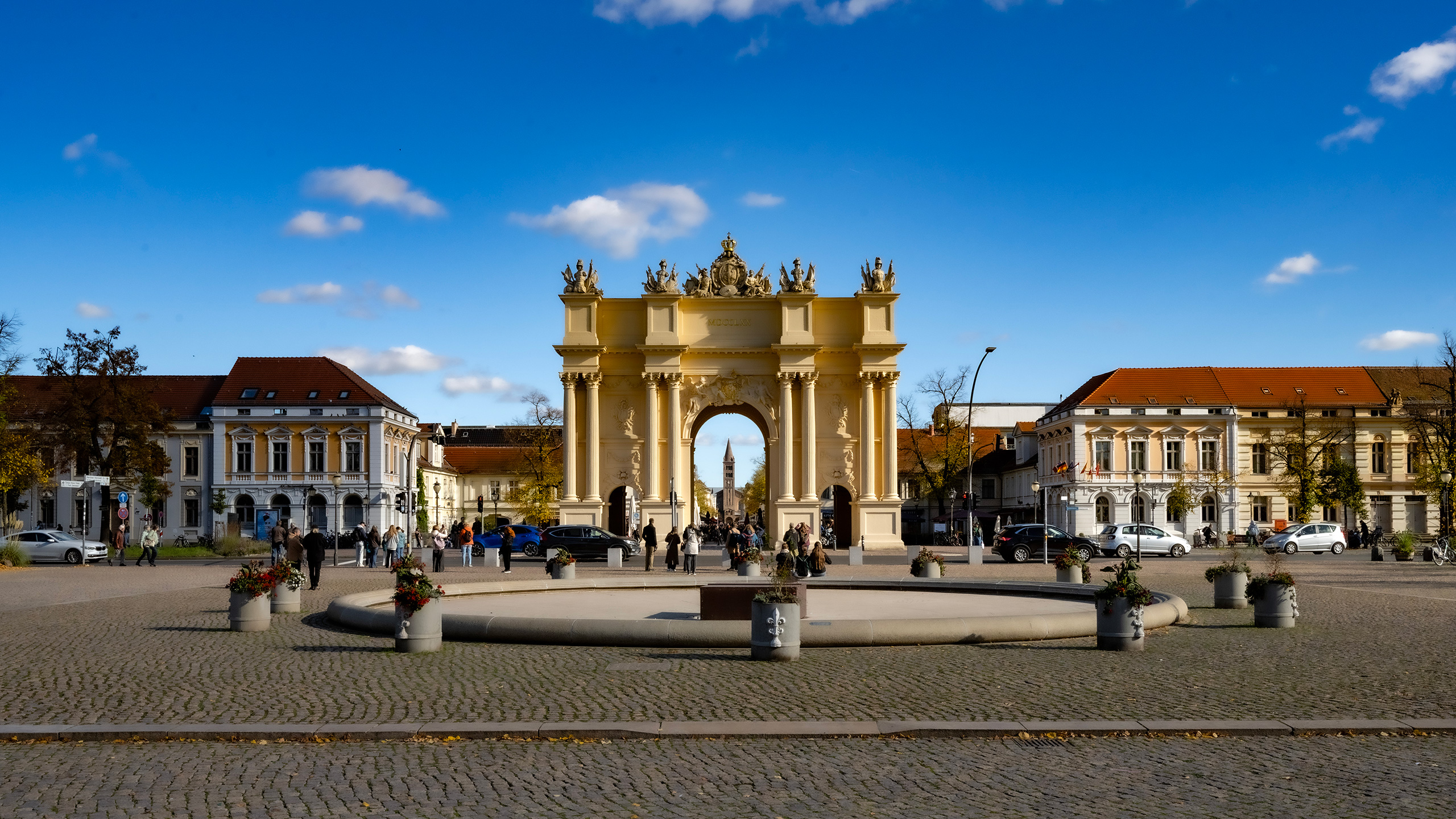
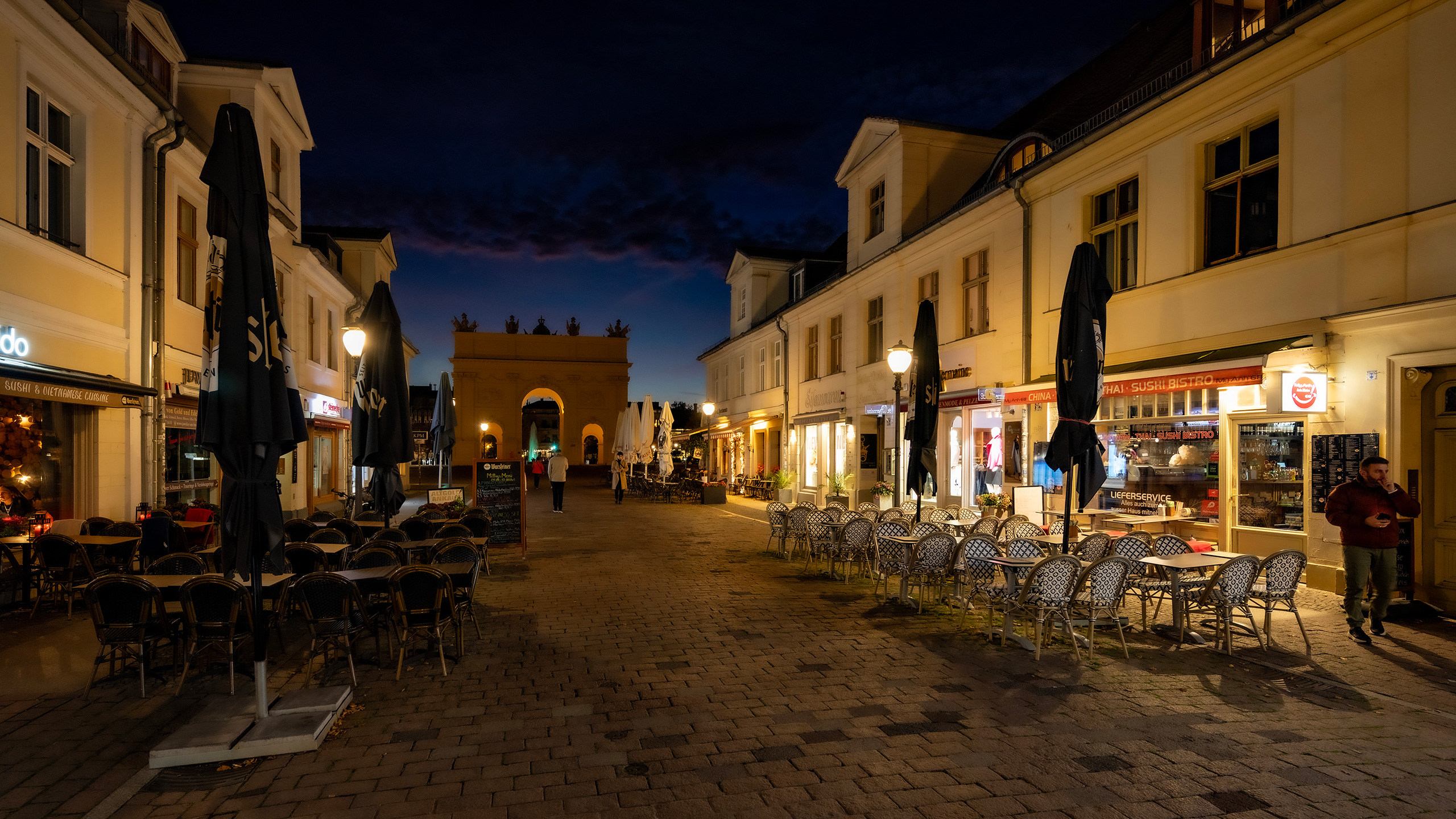
Potsdam's Brandenburger Strasse is firmly anchored by the Brandenburg Gate on the west end, framing a church steeple at the city center, enticing countless locals and visitors to explore the many connection opportunities along the way.
Urbanists call these "terminated vistas," but I use "goals in the middle distance" instead because termination has an unpleasant ring to it. There is only one such goal enticing us to keep exploring on most streets, but this great street has a pair of goals, one at each end of the street, amplifying exploration. And because each block is populated with a wide range of destination types, there are numerous opportunities to connect with others throughout the day.
Connection Conditions
A Connection Condition is a general setting type which cultivates connections between people. The Connection Tools below are mostly made up of destinations within these conditions to which people tend to gravitate.
Open Streets
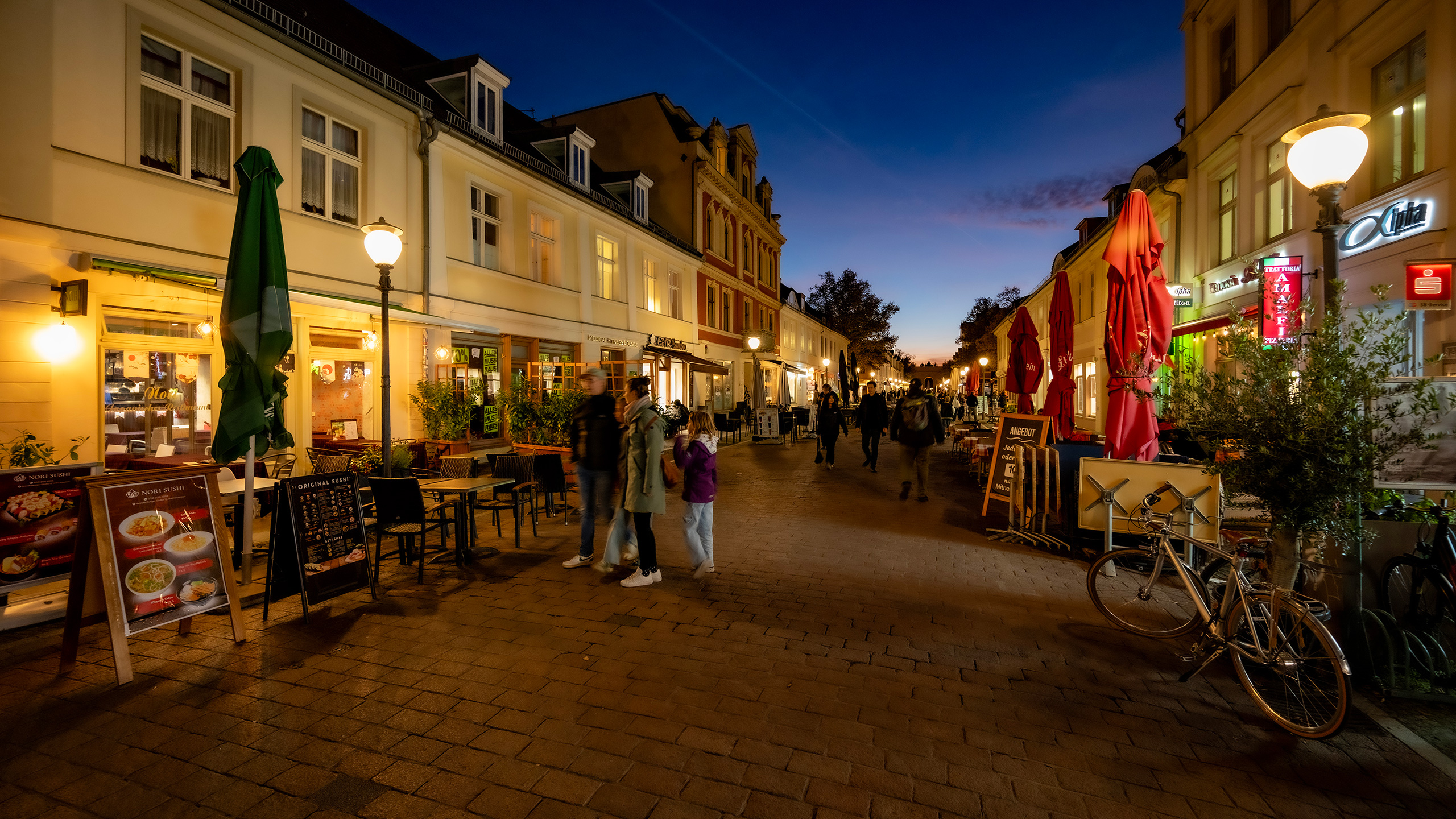
They have existed for ages in some locations, but Open Streets blew up worldwide in 2020. Unencumbered by auto traffic, they can serve many more people on foot and bike than typical traffic-jammed streets. Without high-speed vehicles, establishments along the edges are free to take reasonable amounts of street space for their tables, chairs, and retail displays.
Places to Sit
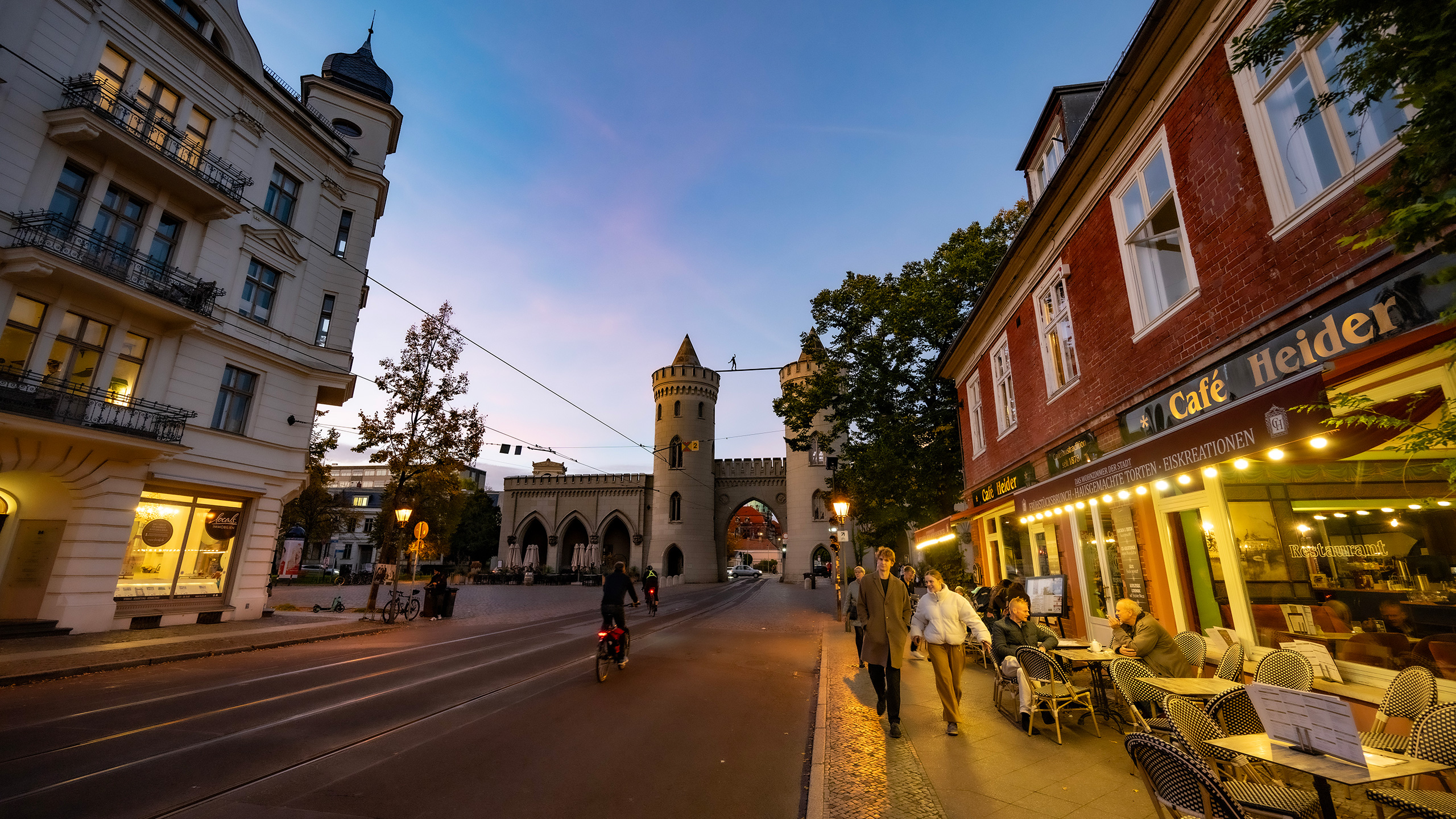
The light of a northern German autumn evening fades behind Potsdam's Brandenburg Gate on what was a swarming street cafe scene less than an hour before. Of all the connections that occur between people who were previously strangers, some by plan and some by chance, most of them occur while sitting down. If your city isn't serious about places to sit, it's not serious about creating a stronger community.
Places to Walk and Bike
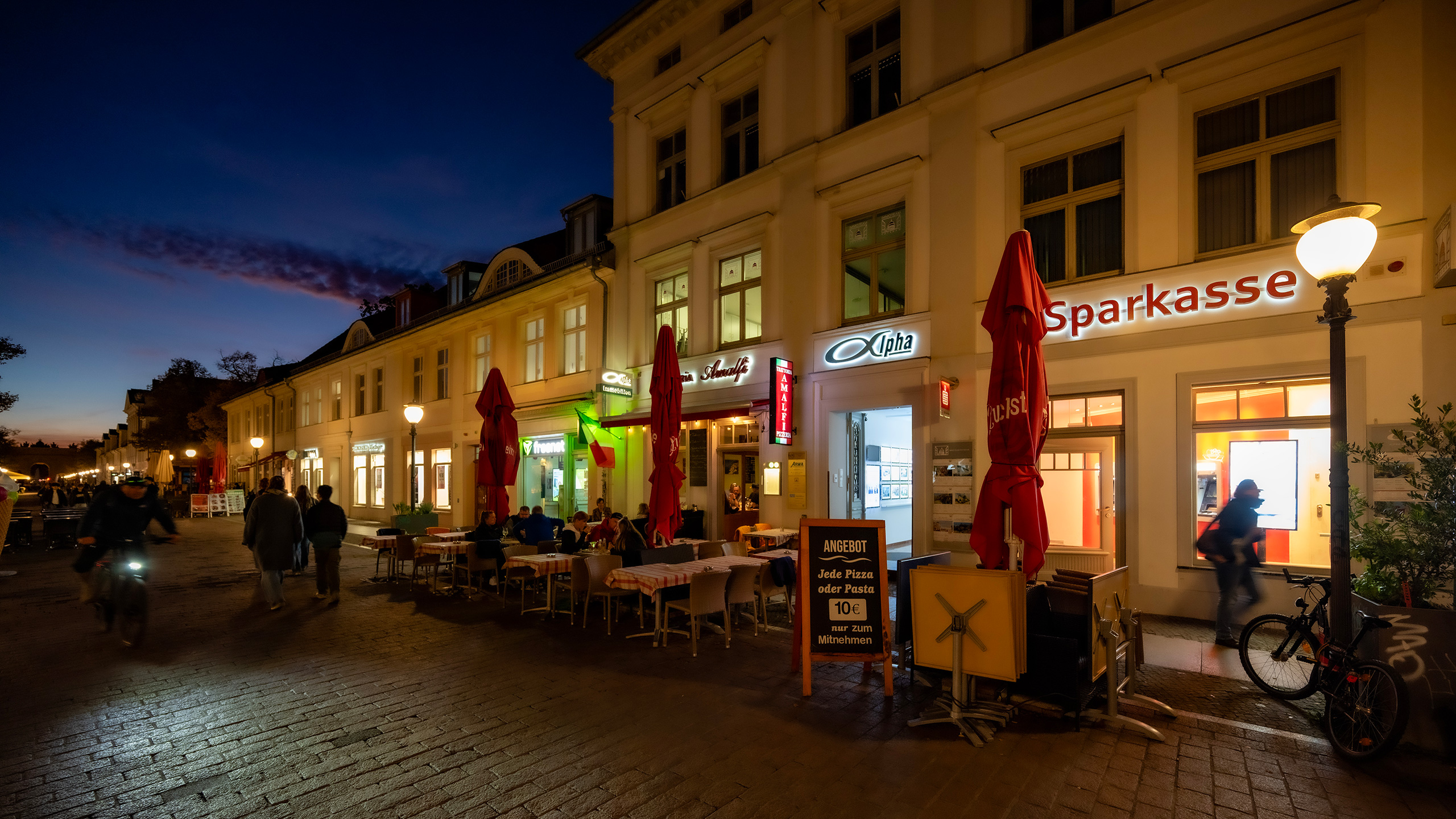
The second-best connection condition is a place where it's easy to walk and bike. In most cultures, people walking or biking tend to acknowledge each other in some way, whether with a nod, a wave, or a smile. Those acknowledgements, though often fleeting, can lead to conversations. And as noted many times here, those conversations can lead to connections, which may endure over time.
Challenging Connections
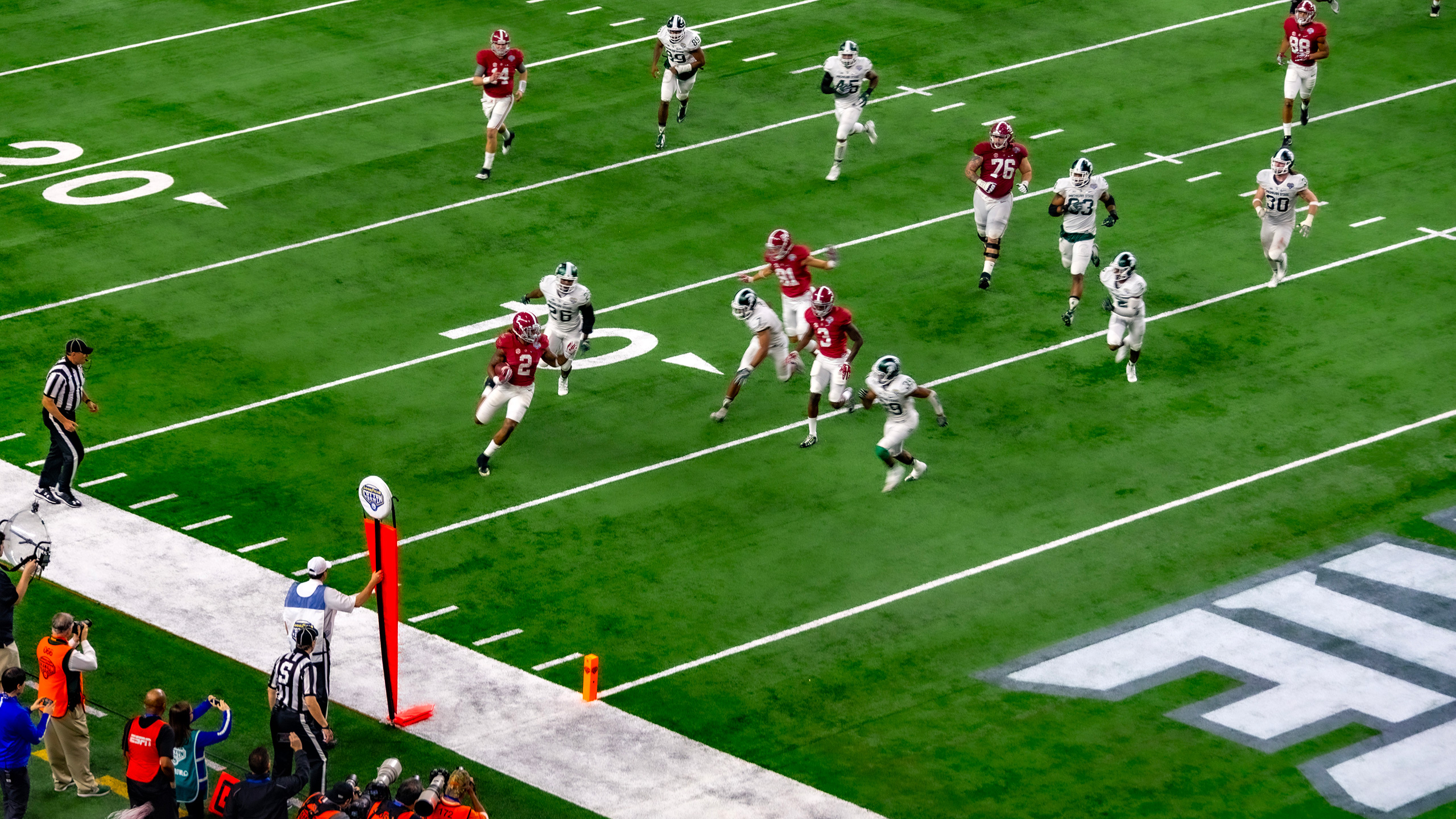
Great connections do not all begin with joyful conversations across a fence or across a sidewalk cafe table. Some are forged in the crucible of conflict, whether with fellow-warriors on a battlefield, teammates on a playing field, or fellow-climbers on a mountainside. And those conflict-born connections can be some of the most durable, often lasting a lifetime.
Conversation Coffins
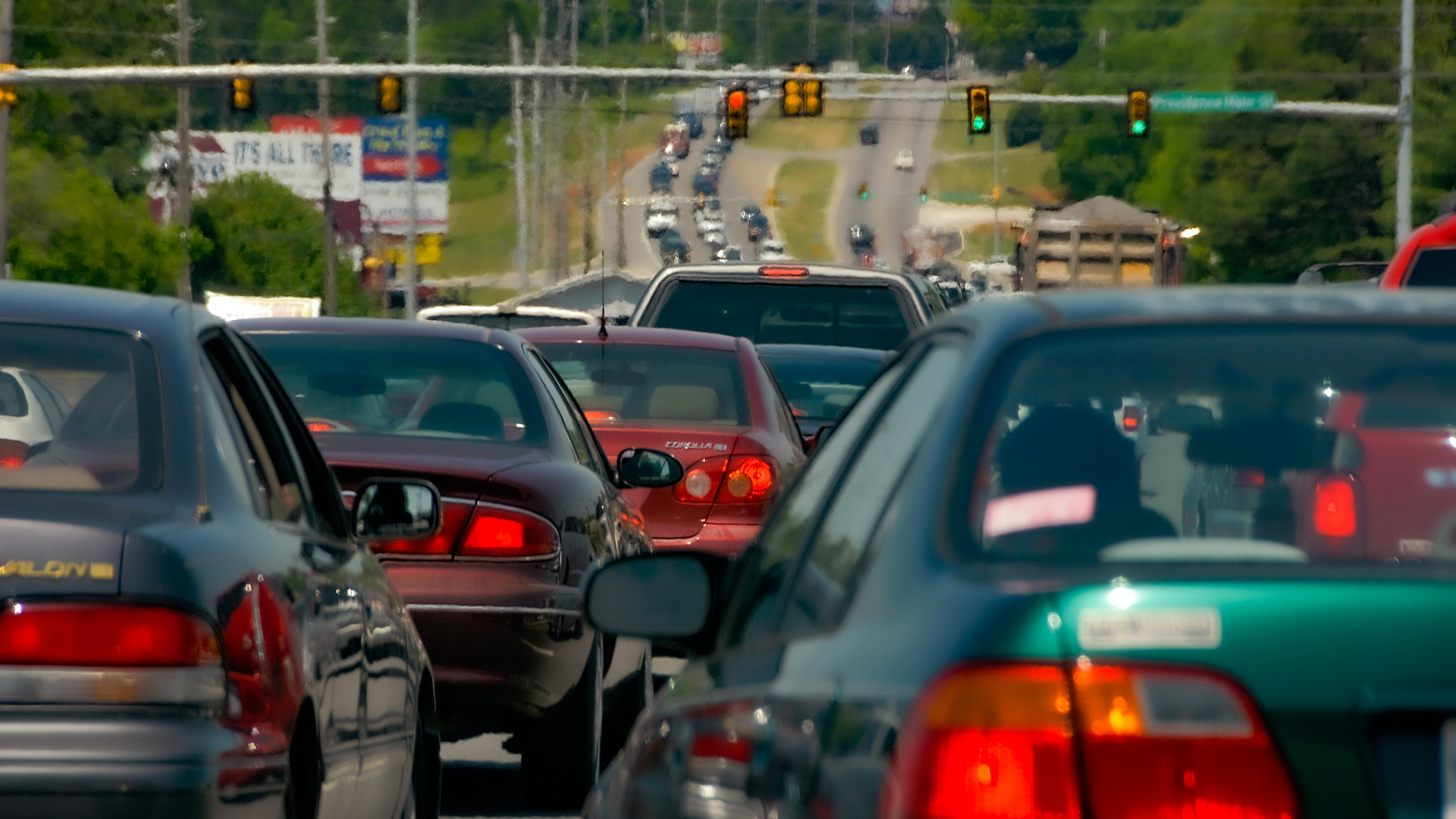
The three connection conditions above all get their jobs done, albeit in different ways. Driving a car is a condition definitely does not work at connecting people (except in crashes) and it's important to understand why not.
Cars are conversation coffins. The only verbal communication between drivers is the usually unintelligible shouts fueled by road rage, and the flip-off is the only hand signal except for old-timers still stuck on shaking their fists.
The "conversation coffin" term isn't just polemical. According to Road Rage Statistics, one person per day is murdered in the US as a result of road rage, most frequently with guns, but more broadly, 66% of traffic fatalities stemmed from road rage, with the car being directly or indirectly the weapon. In 2024, that works out to about 26,000 deaths in the US that began with some form of road rage.
Why do people in the US kill more people with their cars than with their guns? Some make a strong case that road rage begins with getting mad at a machine instead of the driver of the machine. Put another way, it's easier to get mad at mechanical objects than humans, even if humans are steering them.
But this page is mostly about connection, and less so about machines that prevent connection, so let's swing back in that direction. The biggest lessons about cars and connections is that cars put a mechanical face forward, which rarely ends as well as putting a human face forward. So the more our places set the stage for face-to-face encounters, the more connections that place is likely to cultivate.
Connection Tools
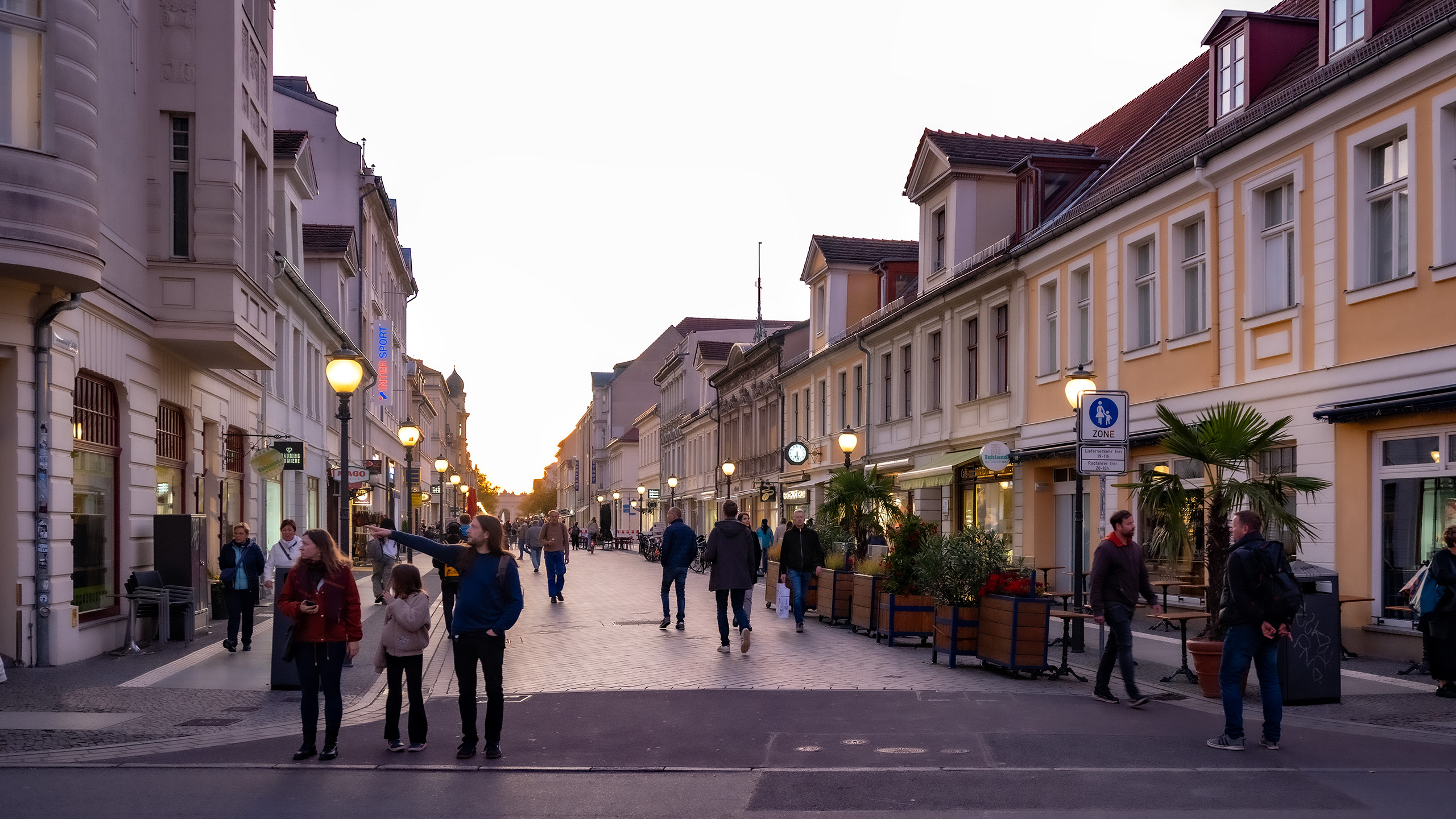
A father points out a destination to his family out of view to the left in this image. Destinations with broad appeal like sidewalk cafes and civic spaces can be great connection spots for the public at large. Places with more dedicated focus excel at fostering connections between those of common causes.
Chamfered Corners
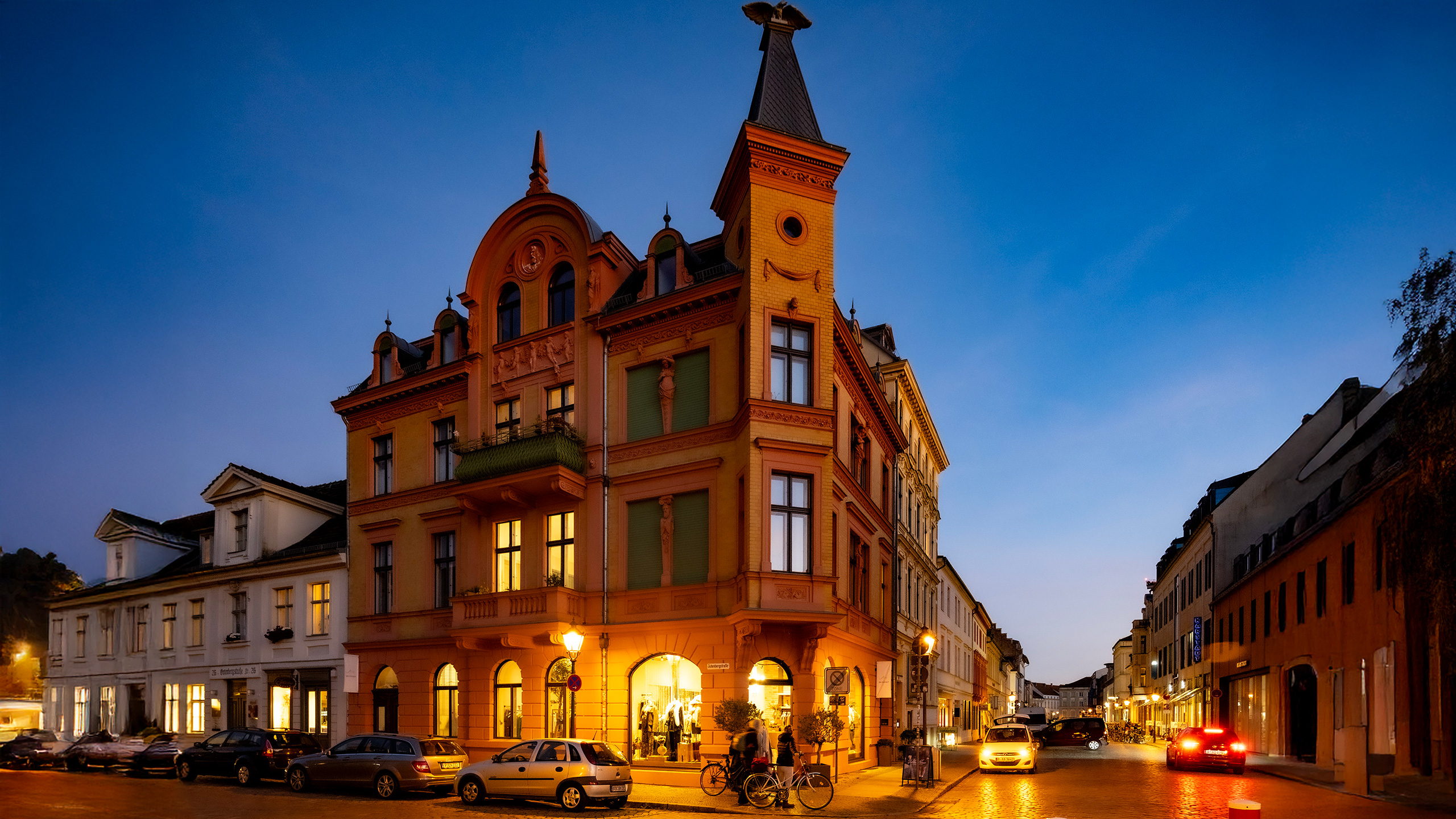
A chamfered corner occurs on a street-corner building where the building's corner is cut back, usually at a 45° angle. This does three good things:
First, it makes the building's corner entry visible from more locations around the intersection, saying with its architecture "you're welcome here."
Second, because the corner is made up of two 45° angles instead of a single 90° angle, people coming around the corner in either direction see each other sooner and therefore avoid crashing at the corner unless they're both running at top speed.
Finally, the chamfered corner makes a good base for a tower or other architectural element that, depending on its scale, may be visible from several blocks away, serving as a Goal in the Middle Distance, thereby enticing people to walk or bike to this corner of the neighborhood.
Sidewalk Cafes
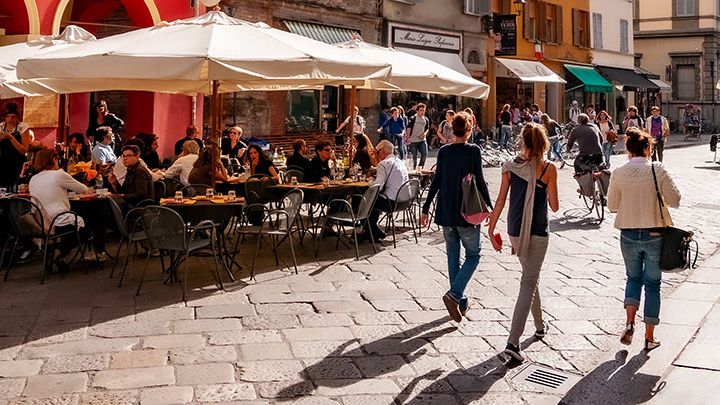
The sidewalk cafe tops the list of general-purpose connection tools because they combine food and friendship in highly walkable places. And they're greatly adaptable in scale from a one-table-deep cafe like this one to the legendary Parisian cafe scene that lines boulevards and avenues several tables deep for world-class people-watching both from the tables and to the tables.
Cultural Settings
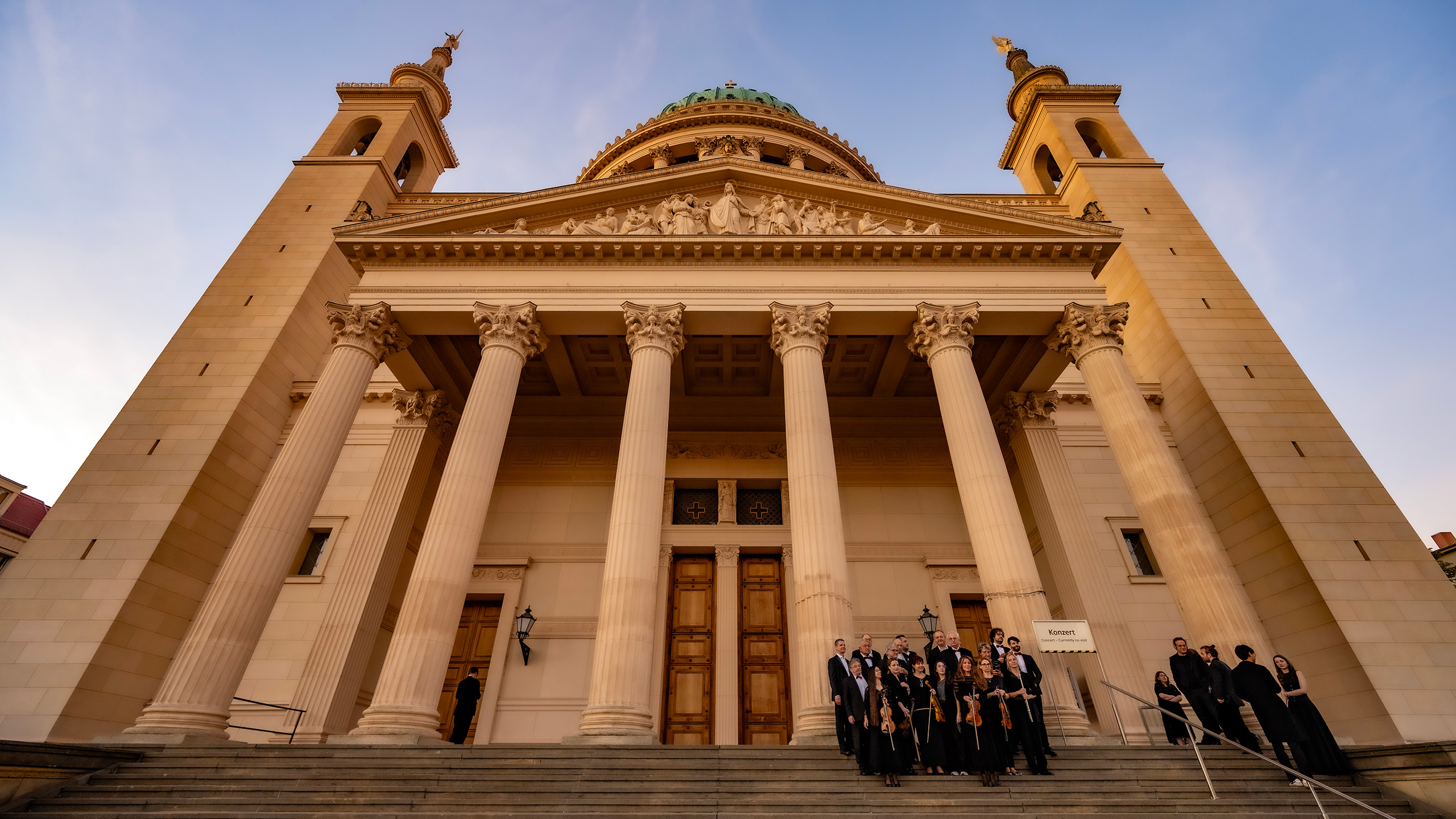
Showcases of the arts from music in this place on this evening to drama and visual arts have the ability to draw large crowds of people who share like passions. And there are few conversation-starters stronger than shared passions.
Books
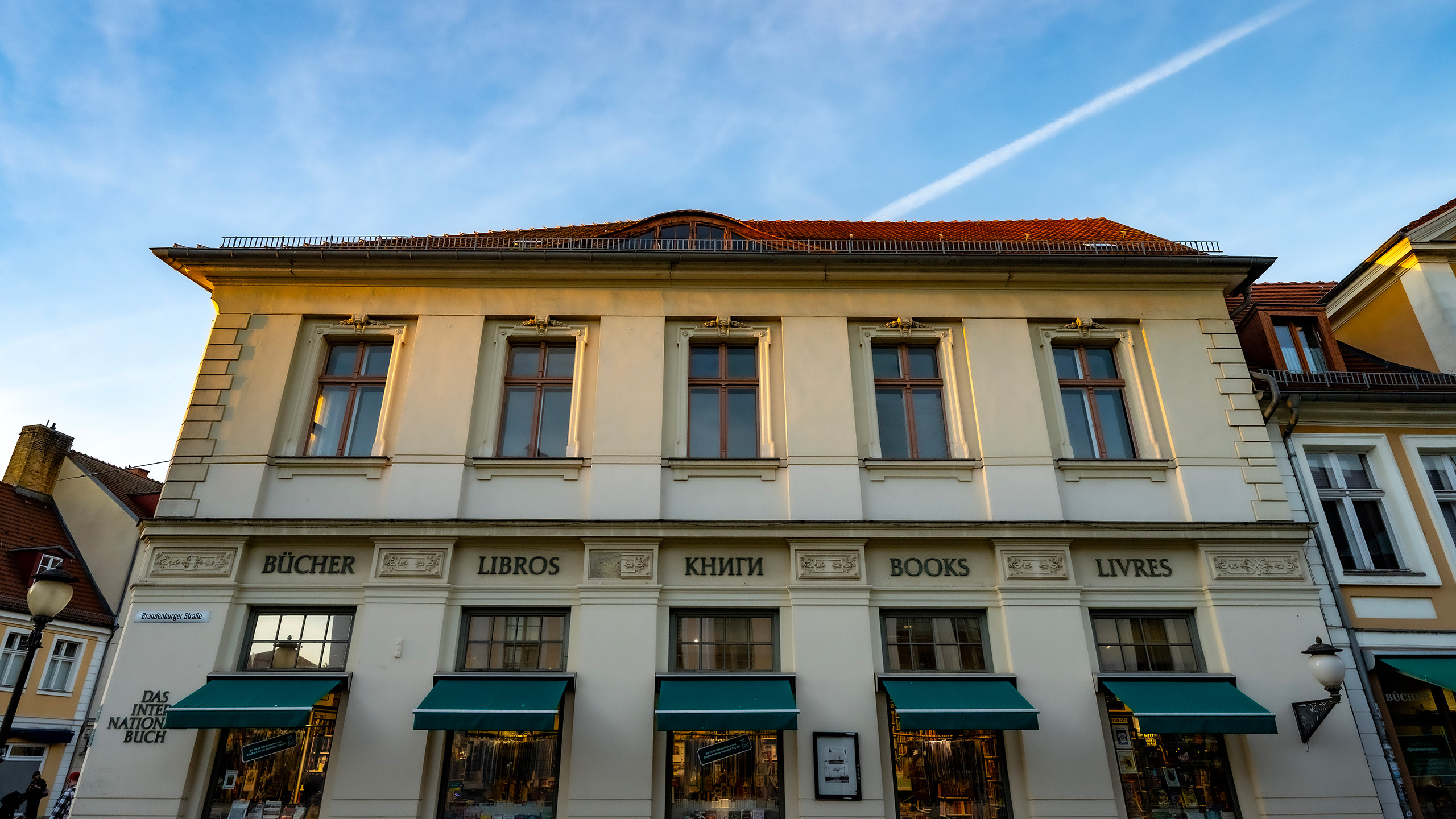
Library and bookstore obituaries were written a quarter century ago with the rise of the web and its search engines. But the reports of their deaths were greatly exaggerated, to misquote Mark Twain. Yes, the super-size chain bookstores are in decline because they mostly carry the same stuff all across the country, and those same books are all available online.
But libraries have reinvented themselves as community-based info hubs, a substantially broader mission than 1950s city libraries. And independent bookstores often have hidden gems you'd never find in a super-size chain store. For example, I found the entire set of Foxfire books in an indy store just five blocks away. For perspective, they are the legendary self-sufficiency books that were 1970s precursors to both the modern homesteading movement and also the Original Green.
Tales & Tools
These ideas support the Connection ideal of the Original Green. The Tales are on Original Green Stories, while the Tools are in Original Green Resources. Several of these ideas support other ideals, foundations, and the Living Tradition Operating System because the Original Green is massively interlinked, so you'll see them listed wherever appropriate.
Declaration of Independence From Sprawl
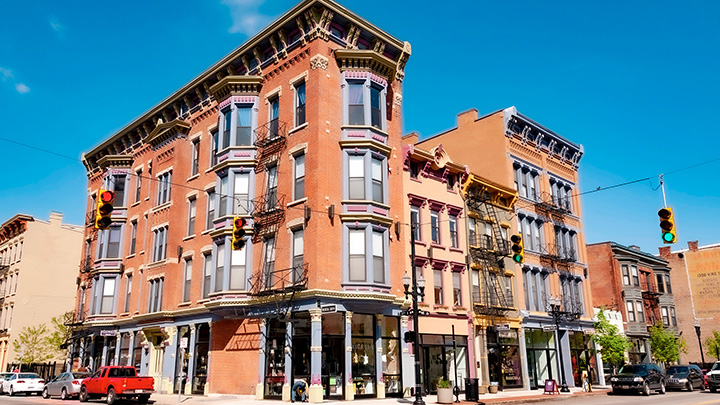
The preamble closely follows that of the US Declaration of Independence but reverses the Original Green sequence to begin with healing, connecting us with the long US history of resisting tyranny, including the tyranny of sprawl. It is meant to be a foundational place document, reminding residents why decades later.

Missing Middle Housing
Those looking for a more social setting in which to live will find a wide range of choices in Missing Middle Housing compared to the relative isolation of single-family homes in the suburbs and the "elevator isolation" where most people never speak in mid-rise condo buildings in more urban settings.

Outdoor Rooms
Wanda and I are writing a book on outdoor room design; those rooms have many benefits, including connecting us with the local environment so that we can Live In Season, which allows us to turn the equipment off and throw the windows open on the less extreme days of the year. And no equipment is so efficient as that which is off!

Outdoor Room Secrets
The previous post is on the outdoor room design book we're writing; this post contains many of the principles, tools, and techniques that led up to the book and that will be included therein. I call them "secrets," not because they're protected in some way, but because it's basic stuff everyone building outdoor rooms should already know.
Planting Seeds of Better Design
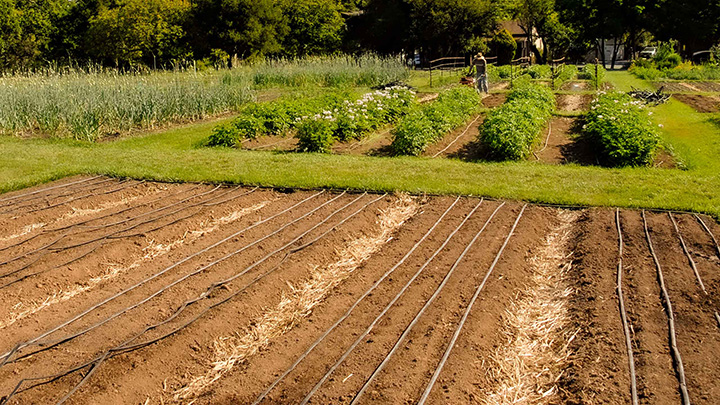
One of Wanda's career-changing conversations occurred in a grocery store parking lot, and it led us on several ventures which acted as seeds to help others do better work, including the Urban Guild, a community of people working at the intersection of architecture & urbanism and sharing best practices.

Porches, Walkability, and Sustainability
Places That Love People set the stage for conversations between those who were previously strangers, and those conversations can lead to relationships, then to the bonds of friendships that lead to people behaving like neighbors again. All of this can begin with simple geometric arrangements.
The Ecological Dividend
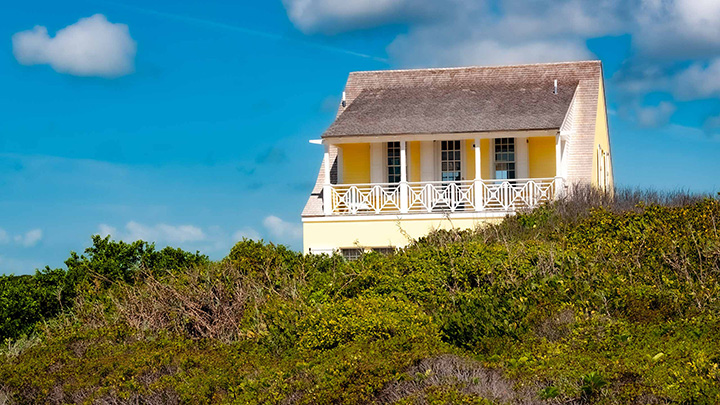
By connecting to nature's ways, a new town or neighborhood can reap many financial benefits due to what legendary Bahamian developer Orjan Lindroth called the Ecological Dividend. The techniques and processes run the gamut of development practices, and are things anyone can do if they're committed to earning the Dividend.

The Schooner Bay Miracle
The eye of Hurricane Irene crossed Schooner Bay at its strongest point, yet Schooner Bay, founded by Orjan Lindroth, survived with essentially no damage, in large part by following the ancient hard-won wisdom of life on the Caribbean Rim, while following none of the hurricane codes from nearby Miami.

The Speed Burden
The ways we connect to daily, weekly, and monthly needs drive our cities in very different directions. Remaissance Florence on the left had no need for great speed, and changed the world in a footperint slightly smaller than an Atlanta interchange because the latter is burdened with the necessity of getting around fast.

The Teddy Bear Principle
Katrina Cottages clearly demonstrated their lovability with strong connections to nature we can all understand by looking at our baby pictures, then in the mirror. Facial proportions of humans and other mammals change from infancy to adulthood, beginning with the most endearing appearance in infancy, likely for preservation of species.
Tool-Tagging
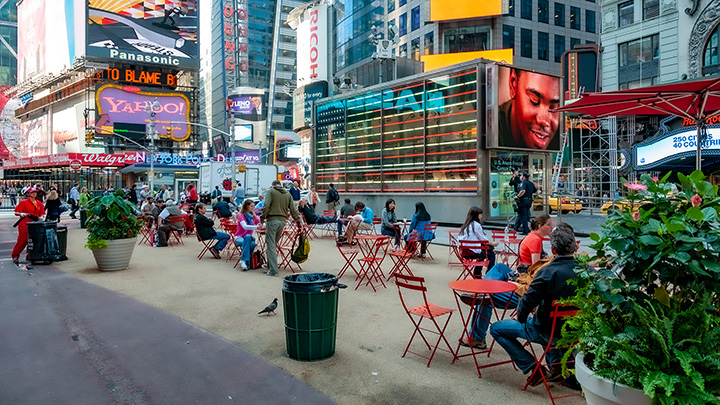
The Sky Method is a development tool we've built based on a process dating back to antiquity, but Tool-Tagging is the opposite: a development process based on the latest digital tools like geotagging, and that is calibrated for generations of stakeholders as young as those in high school or younger.

Townhouse Guidelines
The New Urbanism got good early at doing single-family housing, but connected types like townhouses, a Core type of Missing Middle Housing which provides great connection with neighbors, lagged. These guidelines elevate design to competence, aiding in attracting those seeking a more connected setting.
Walk Appeal
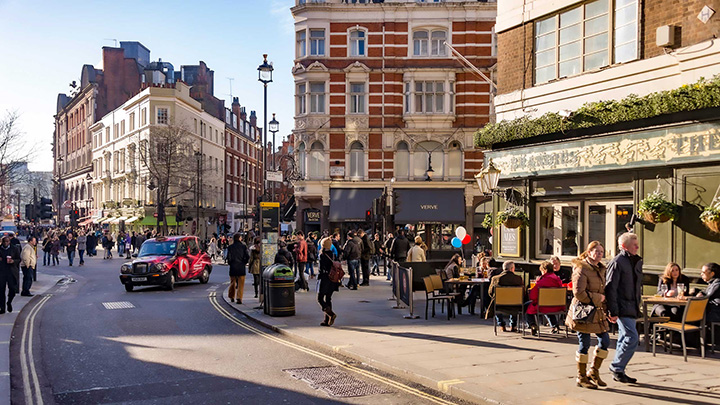
Few conditions set the stage for us to connect with each other than Walk Appeal, which goes far beyond the long-promoted ideal of walkable places, where you're merely able to walk ("walk"-"able") and creates a higher standard of places where it is appealing to walk, so of course we get out and get acquainted with people more often.
Walk Appeal Development
For urbanism geeks only! If you're interested in the development process of the Walk Appeal idea, begin with this post. You'll find links at the bottom to following ideas as they were developed over time, enriching the idea set to the point that it will hopefully become a book someday soon.
Where We Were In 2012
Periodically taking stock of where we stand, in large part because of connections with colleagues, is a useful practice. This post assesses dawning points (things we've finally gotten started) and tipping points (things that are now spreading all over) of the New Urbanism, which itself has strong connections with the Original Green.
Search the Original Green Site
Buy the Original Green book on Amazon

Rather Buy Indie?
Contact Sundog Books at Seaside, which is our favorite bookstore ever!
Speaking
I speak on the Original Green across the US and abroad. Would you like for me to speak (via Zoom these days) at your next event?
Got an idea?
If you have an idea for a story, or know about work we need to feature...
Subscribe
... to receive periodic Original Green news releases. Here's our full Privacy Policy, where you'll see that we will not share your info with anyone else, nor will we sell it to anyone. All three fields required.
Home
Origins
Foundations
Nourishable Accessible Serviceable Securable Lovable Durable Adaptable Frugal Education Economy Culture Wellness
Resources
Original Green Scorecard Initiatives Presentations Reading List Quotes Links Tweetroll
Stories
OGTV
Media Room
Bios Press Speaking
© 2021 Mouzon Design, Inc.