Prospering Society
True enduring prosperity is homegrown because the feet of CEOs responsible for your town's biggest employers are not sitting under a desk in some other state or nation. If a town falls on hard times, local employers feel it as well, and it's in everyone's best interest to find a way back up to prosperity. Contrast that with CEOs in a distant place who naturally care less, if at all, about closing down their operation in your town.
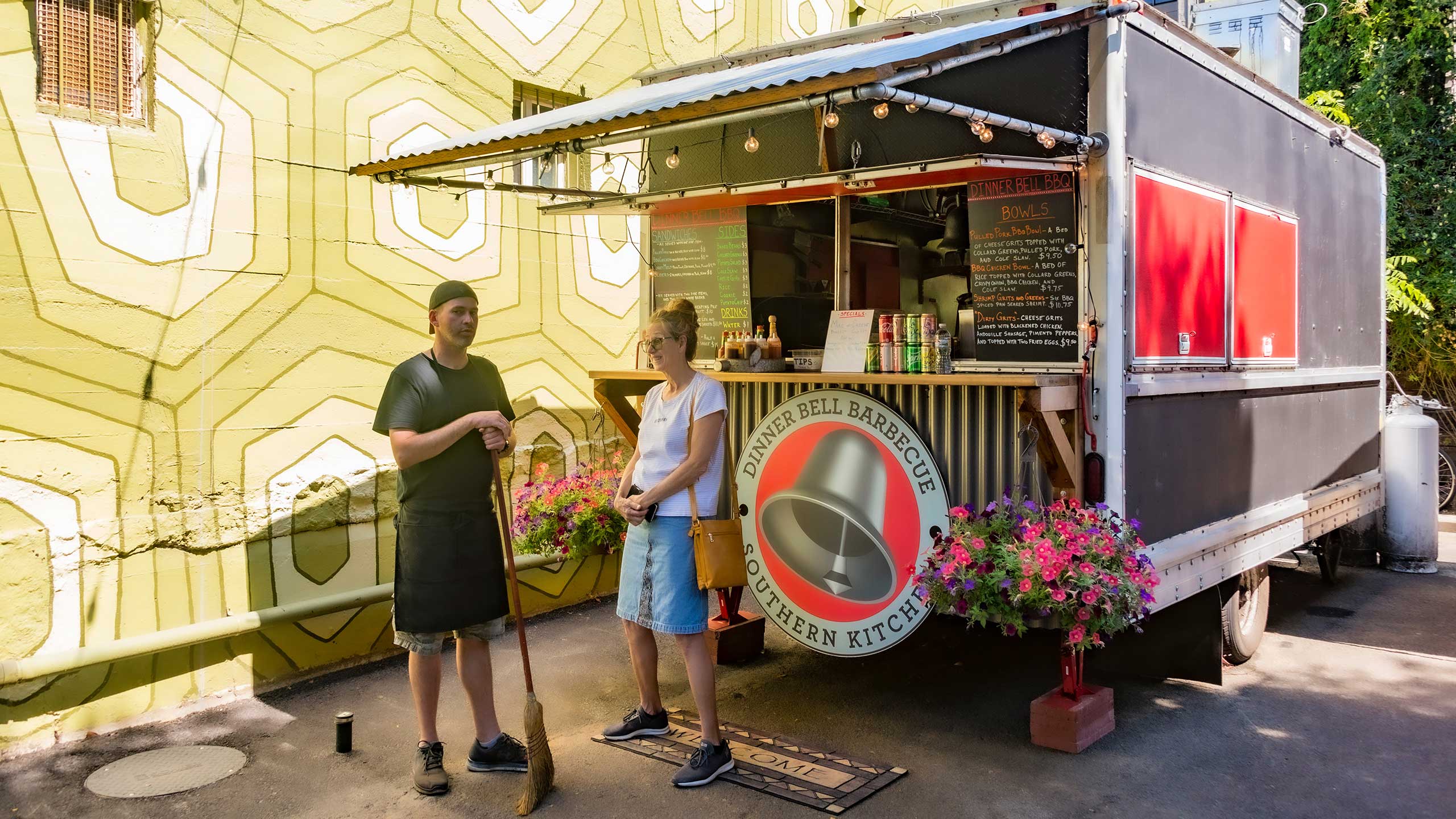
Homegrown business depends first of all on places to plant the seeds of new business. How small can you start a business in your town? Can you start as small as Dinner Bell Barbecue in this image? That's the entrepreneur on the left and one of the investors on the right; I'm the other one. And how how many hoops are there to jump through for new startups? Do you "grease the skids" for them to go quickly from the initial good idea to getting in business? Be startup-friendly.
There are two sides to employment, of course: the employer and the employees. When local business thrives, how well-suited is your town to invite more people to town to work in those homegrown businesses? Or more specifically, how many places in town can they afford to live? A town with an affordability problem also has an employment problem when local business is expanding.
Principles of Local Economic Strength
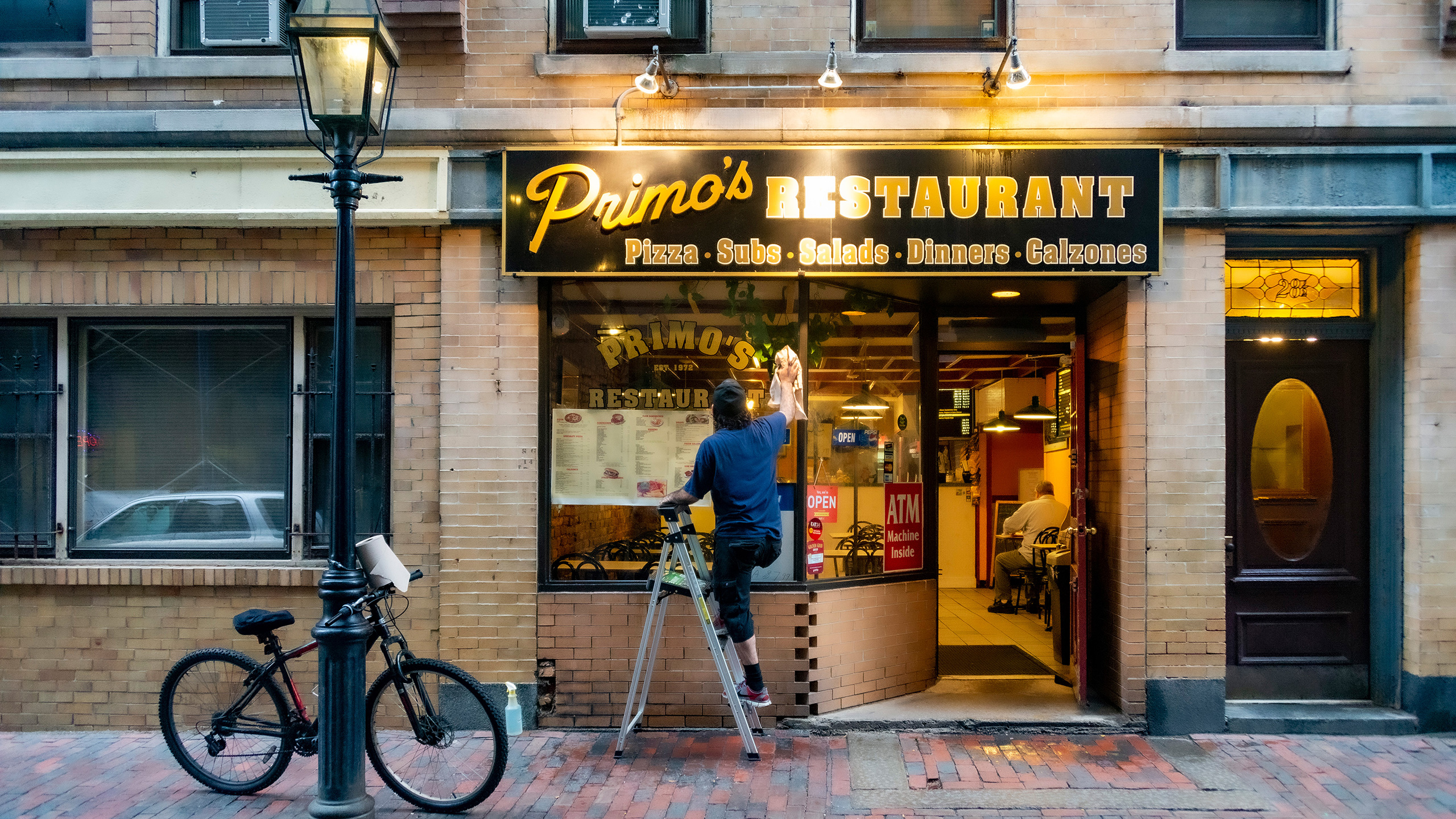
It's easy to spot proprietors of locally-owned businesses. They're usually the ones washing the windows, sweeping the sidewalk, and greeting prospective customers. In short, the guy on the ladder is probably Primo. If an employee of another business on the street spends as much time making the face of their business look good, keep an eye on them because they're likely to have their own business before long. And that's a good thing because the percentage of locally-owned businesses on Main Street is a strong indicator of the town's resilience.

Young Talent
If you want your city to boom, you need young talent. To get young talent, you need places they can afford to live upon completion of their college or craft education. But the top thing to know about affordable places to live is that it is not an affordable housing problem; it is a place problem, one element of which is housing young talent can afford. Look at the problem too narrowly, focusing on single metrics like the number of new units provided, and you'll miss the big picture of whether the city or town is an affordable place to live. Or within that single metric of new units provided, what's the median cost? I've seen development advocates trumpeting hundreds of new units, which is good to have, but with a mean sales price of over a half-million dollars, which does no good for recent graduates. Widen your view.
The problem isn't metrics in general; it's the narrowness of the metrics. Quality-based urbanism metrics, because they examine the overall quality of the place, look at simple indicators of complex conditions, therefore broadening the effective view by substantial margins.
But things can still get complicated, as in the apparent conflict between building a prospering society in an affordable place. It's relatively easy to make a place more affordable by doing things that wreck the local economy, but then the society inhabiting the place cannot prosper. But prospering places tend to get expensive, ruining the affordability. Acting on narrow views tends to ruin everything outside that view.
The key to building prospering societies in affordable places is setting out from the very beginning to create a wide range of home values, both purchase and rental. The Industrial Development Complex tends to build subdivision pods with values within each pod varying by around 5%, and often less. I planned a place where we set out from the beginning to create a 15:1 range of values, which is 300 times as great as the range in typical subdivision pods, which is unthinkable to the Industrial Development Complex. We achieved that range, but with this caveat: the developed value of the land was 25 times as much as in conventional subdivisions all around. While on that same developed land, we were delivering the most affordable homes that market had seen in a couple decades.
How is that even humanly possible to deliver a range of values 300 times greater than the Industrial Development Complex delivers on developed land worth 25 times as much as they're delivering? The answer is simpler than you might think: conventional development has hamstrung itself by treating subdivisions like widgets rolling off the assembly line, This means building huge numbers of nearly-identical products that vary little except in basic elements like wall, trim, and roofing color. This also means that they've slammed the book shut on a broad range of building types that aren't single-family detached houses or units in condo towers. We now call those types Missing Middle Housing because they've been missing from the repertoire of conventional development for years.
So in short, the Industrial Development Complex has done it to themselves.
But there's no reason for us to hobble ourselves by following their mistakes. And by flying free of those unnecessary constraints, we can do what humans have done for centuries: build places with a wide range of affordability which can foster a prospering society.
Let's get busy.
Cool Factor
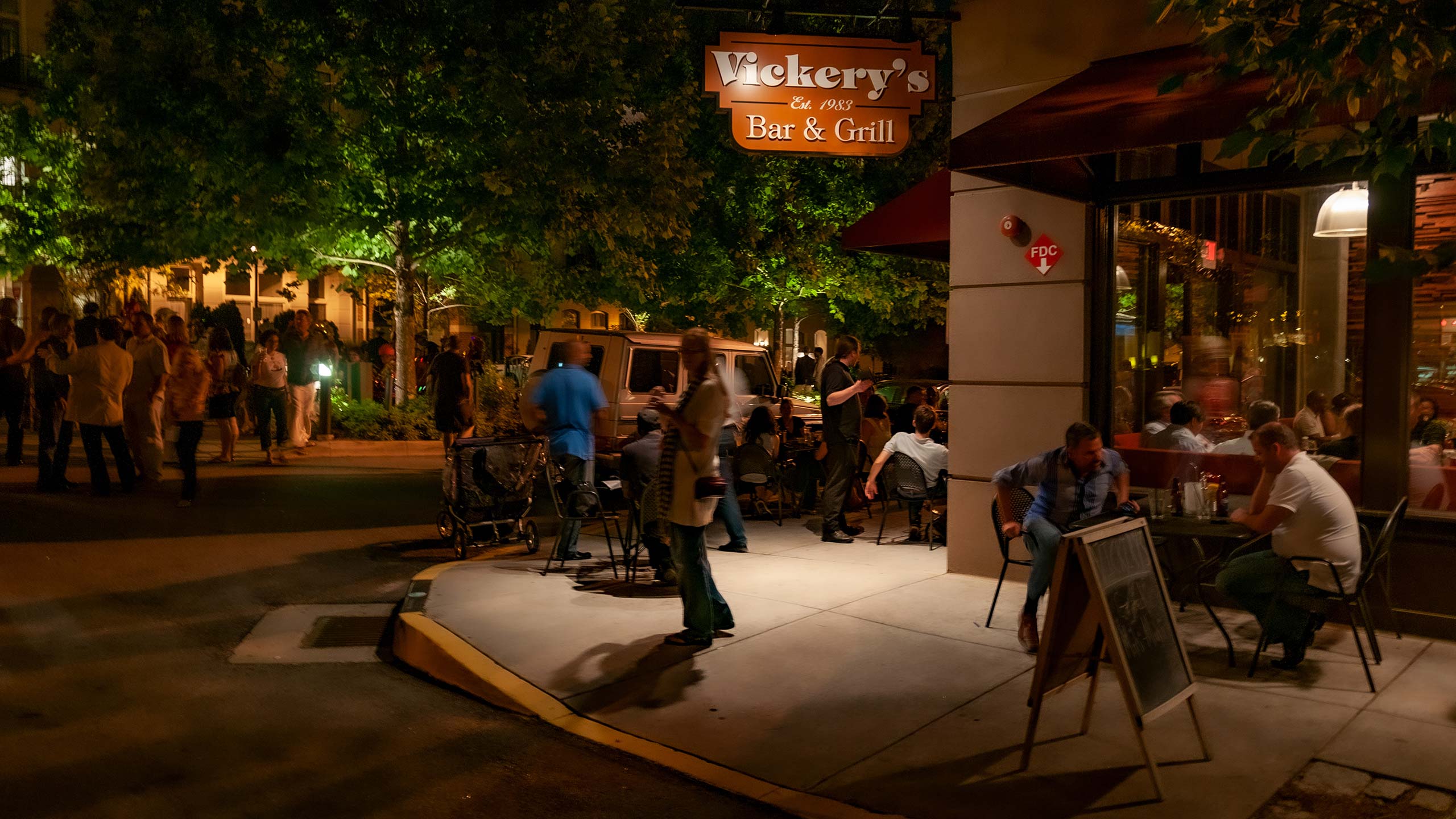
Natural resources that can be mined, harvested, or otherwise exploited have long been high on the list of things industry values when looking for a new location. Since the early years of the Industrial Revolution, employees would often relocate to be employable in those new locations. But young talent today values experiences far more than stuff, so they tend to look for experience-rich locations first, move there, and only then look for a place to work. This breaks the old process driven by industry and puts individuals (especially younger ones) in the driver's seat. And their top priority is the Cool Factor of a place.
Cities Driving Industry
Very Important: What I'm proposing here is not Communism. It is grassroots economic development.
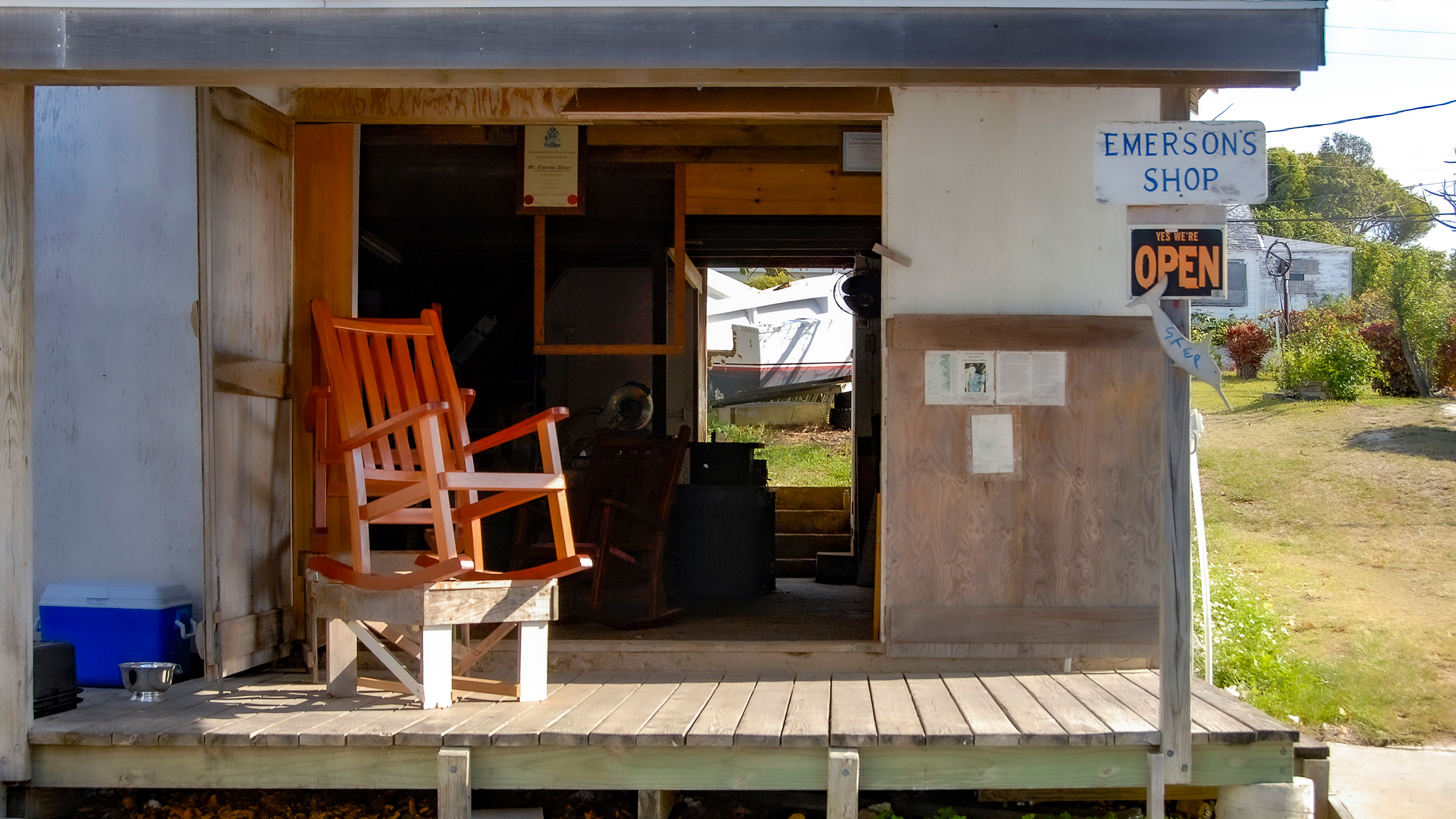
I’m no industrialist nor am I a politician but I’m wondering: what if cities drove industry rather then industrialists driving industry? There will always be places where labor is cheaper than in the US, so the right decision for an industrialist is always to offshore the jobs.
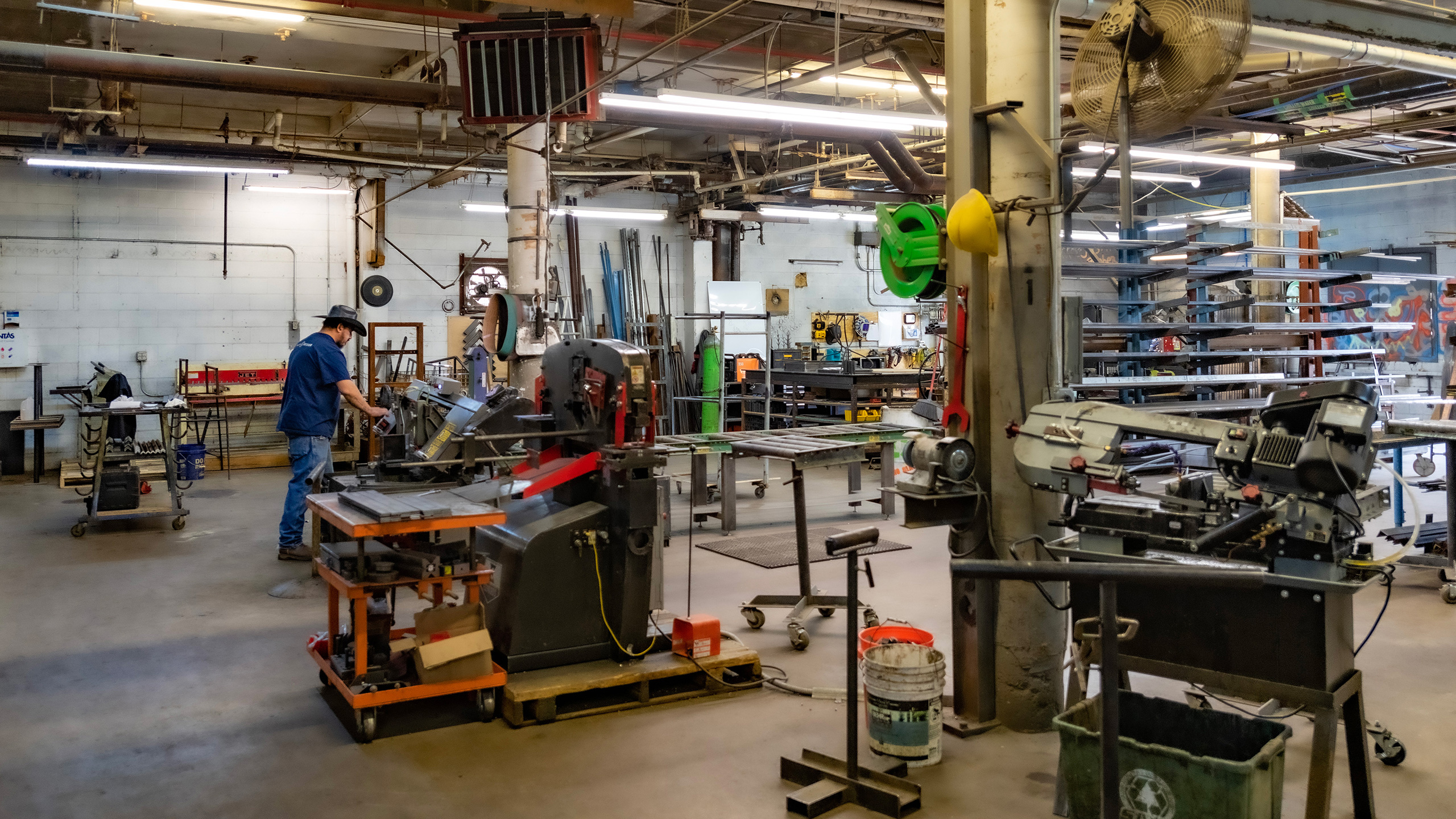
If cities chose to drive industry rather than chase industry, things could look very different. Industrialists know their industry, but cities know their region. An industrialist driving industry looks for scale; a city driving industry looks for opportunities for its citizens. A city driving industry first looks for products needed in the region. Next it tries to find ways to lower the threshold for its citizens to go in business making those products, and regulates them only as much as is absolutely necessary for their scale.
Industrialists driving industry love the largest scale and hope to achieve it quickly. Cities driving industry love the smallest possible starting scale for their citizens and are patient with them scaling up their businesses, if ever. Some will want to remain at the craft scale indefinitely.
Don’t confuse cities driving industry with cities owning industry; as noted above, this is not communism. Rather it is cities doing the right thing for their citizens, rather than chasing industry and then sitting helplessly when it moves away in a few years. A craft-scale business selling regional-scale products is arguably the safest business to be in because big industry and big retail find it difficult to compete in markets that small. Cities driving industry should focus here.
Micro-Production
I’m no economist, but I can’t help but think that small disinvested towns across the US would do better seeing themselves less as consumers and more as micro-producers. Big retail like Walmart sucks close to 90% of every dollar spent out of the town, right? Local micro-production where products never touch the international supply chain can be quite profitable compared to those on the bottom rungs of global supply chains. And for most industries those chains no longer even touch US shores.
I wonder how many communities that have sunk so far into opioids would be much different if we saw ourselves as something other than employees and consumers? And seeing ourselves as dependent on global corporations that are abandoning us now? Could tiny things like the Single-Crew Workplace, the food cart, and the portable shop help turn us around? Is our worst addiction not opioids but rather the Addiction to Big? Everything industrial-scale from big employers to big retail leaves us powerless. Small opportunities bring hope. We Can Do That should be the motto of every place re-setting their economic compass toward micro-production.
Local Resilience
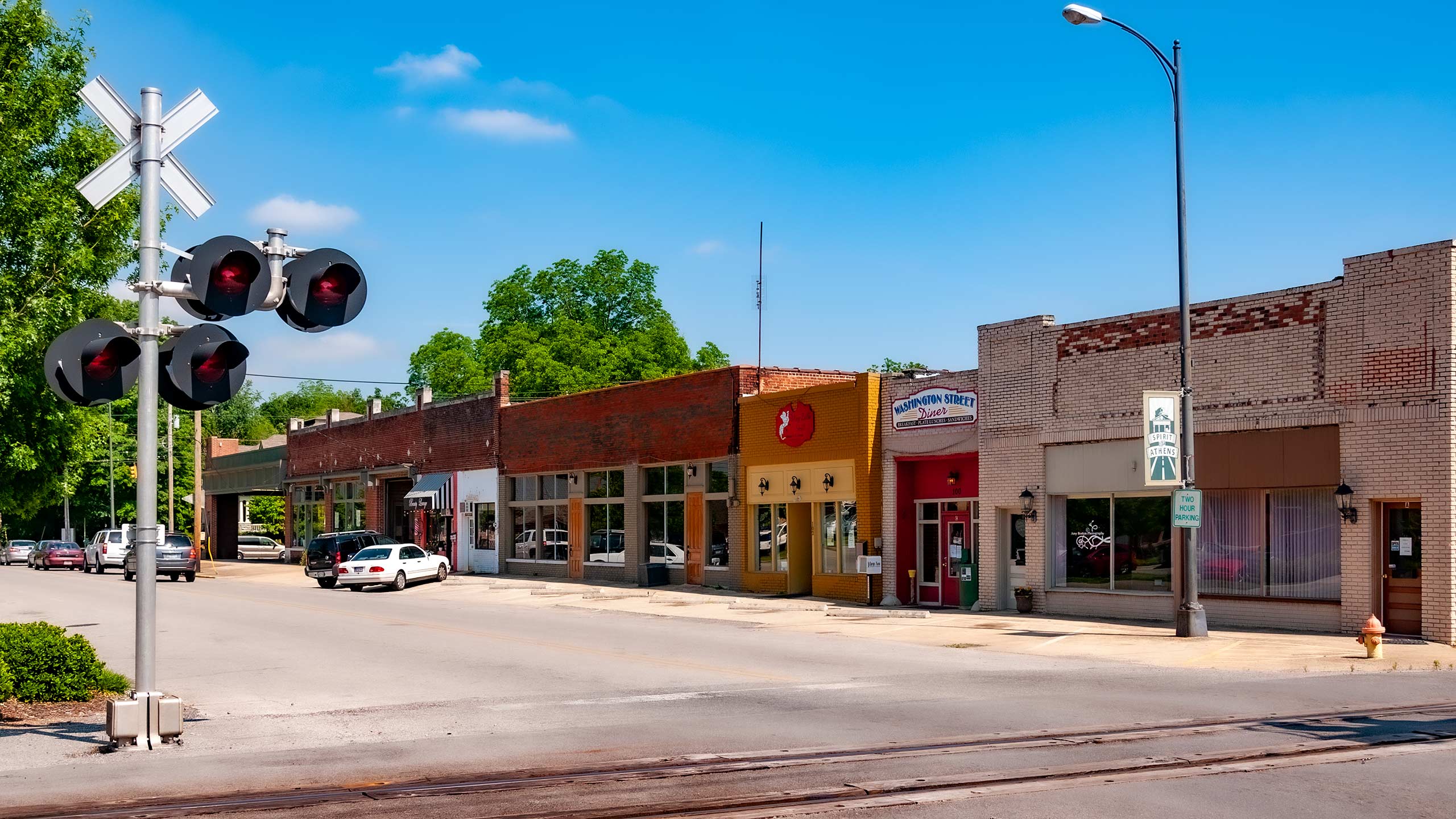
Local resilience begins where Main Street meets the railroad, the river, or the shore, not out in an industrial park on the edge where multinationals are recruited to locate for a little while, until the day comes when they decide to move elsewhere. Help locals thrive; they stay. It's their home.
Local Management
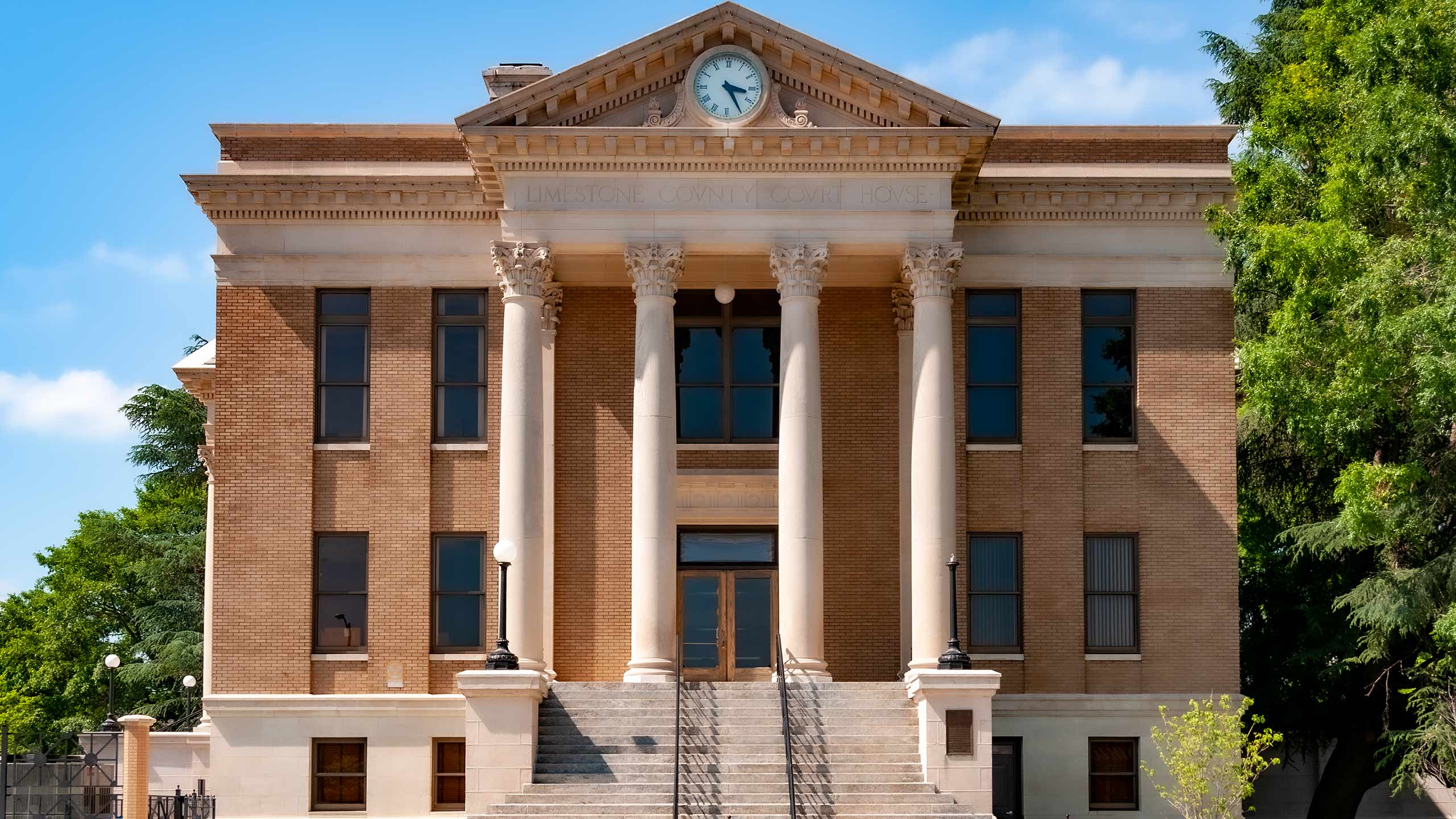
Local management runs from city government level all the way to management of specific parts of the city, such as Main Street. The process of subsidiarity is strong at local management and is based on the principle that organizational, social, or political matters should be handled by the smallest, lowest, or least centralized authority that is able to competently handle the task. Higher-level authorities (like a national government) should only intervene when lower-level bodies cannot efficiently manage a task, such as in cases of national defense.
Focused Finance
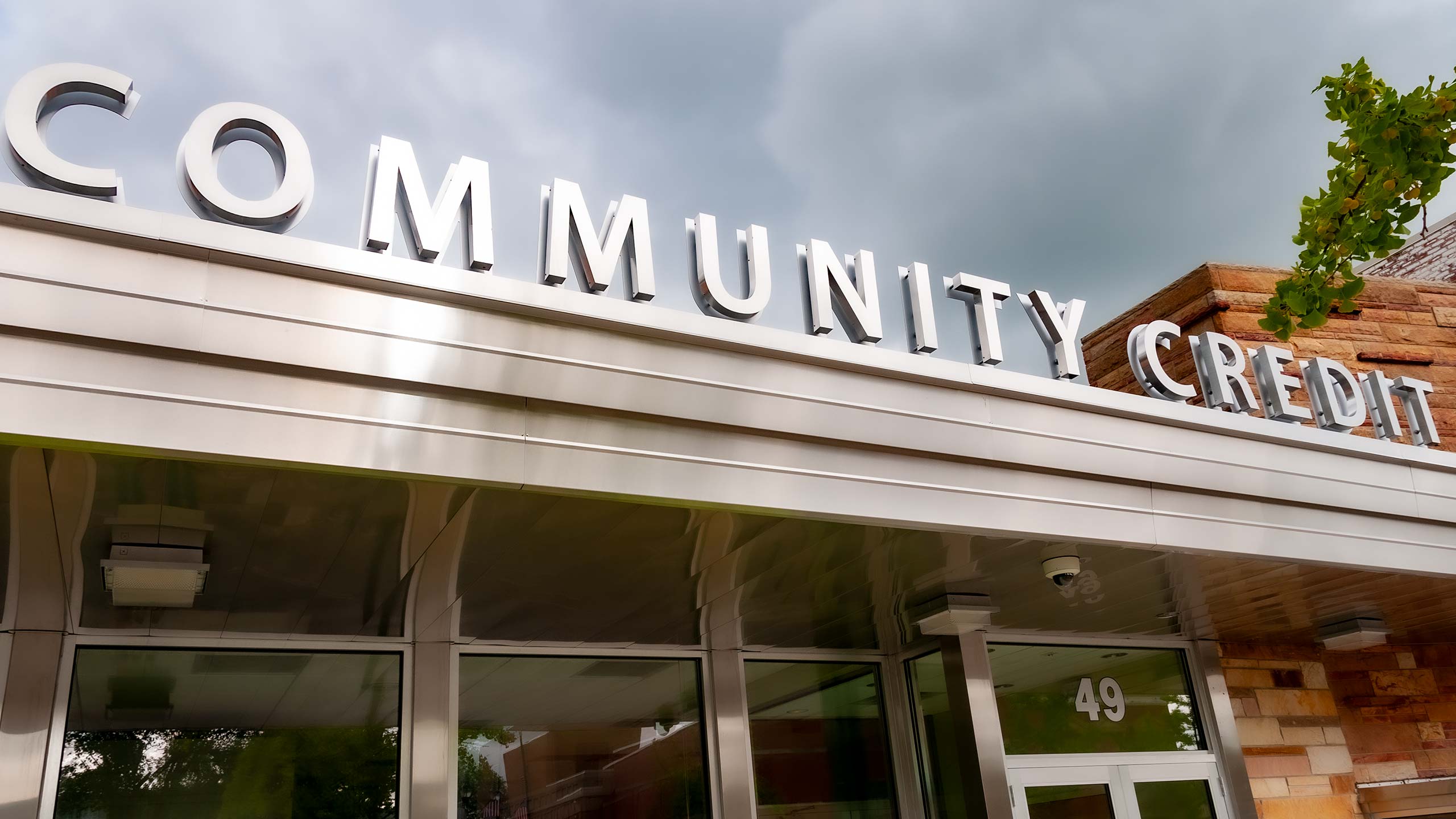
I'm old enough to remember local banking before it went interstate in 1994. And I'm no banker, but I have no illusions that banking will ever again in the foreseeable future stop at the state line. But the days of knowing your banker had more going for them than today's digital-only banking experiences where you never see a human face or even hear a human voice. Our bank does does a good job with face and voice, and so long as we walk to the branch that's less than four blocks away, the look and feel is a lot like the pre-1994 era. I have no insight on influencing financial institutions, but hope some of those reading this might, and might take it upon themselves to encourage institutions with which they have connections to lean back into locally-focused finance with a human face.
Economic Bases
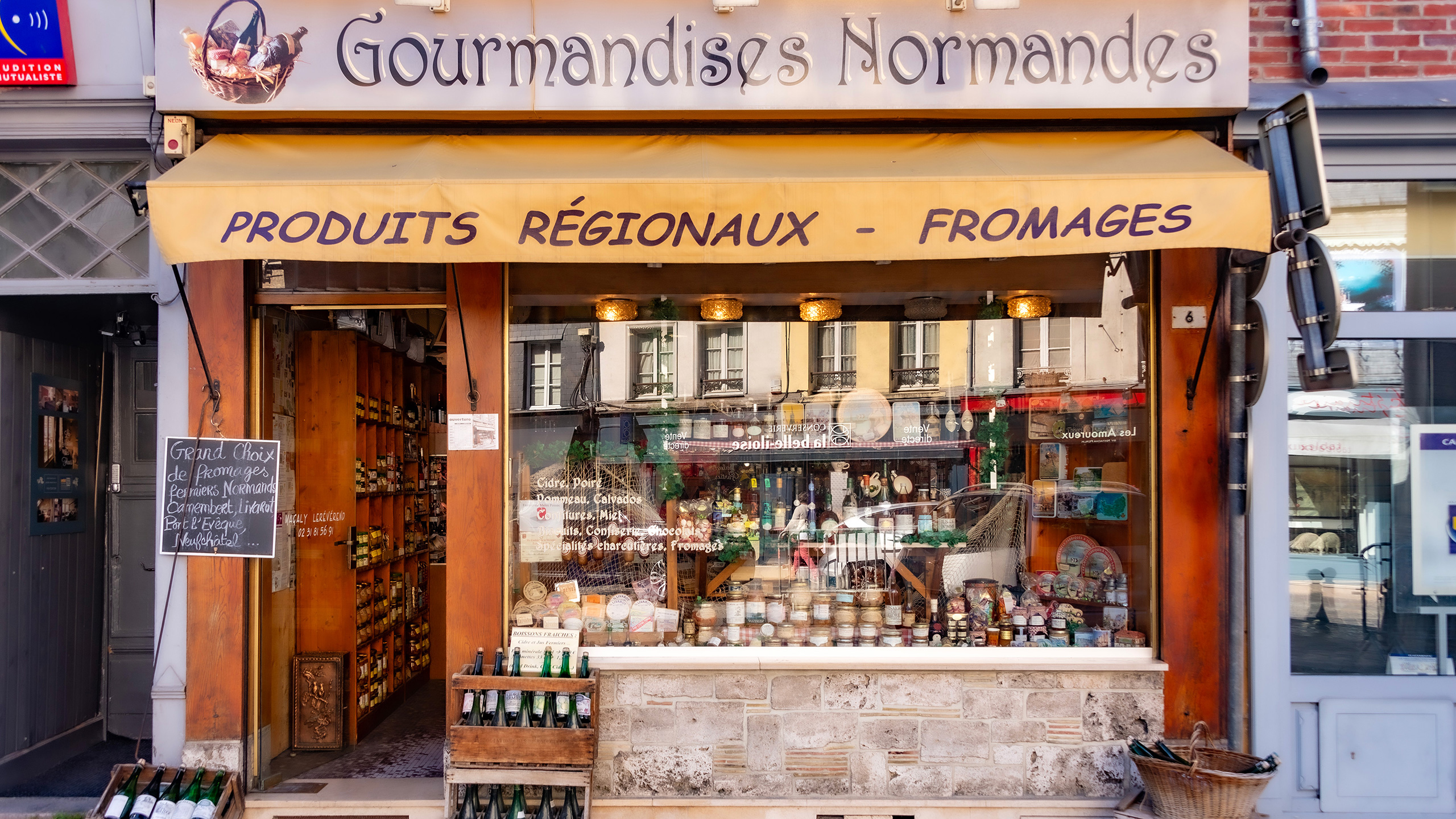
There are numerous experiences and products upon which a local or regional economy may be based; those included below are found frequently in this era, although bases change over time. The key question is "what are the experience opportunities, materials, crops, regional skill sets, or cultural settings in this region or place upon which we might build a portion (or occasionally all) of our economy, and which aren't attractive to big business?" The last item is huge, because big business could put a startup economic base out of business quickly if it appears attractive enough. And big business doesn't even have to be right about that; they merely need to kill the new base.
Local Craft
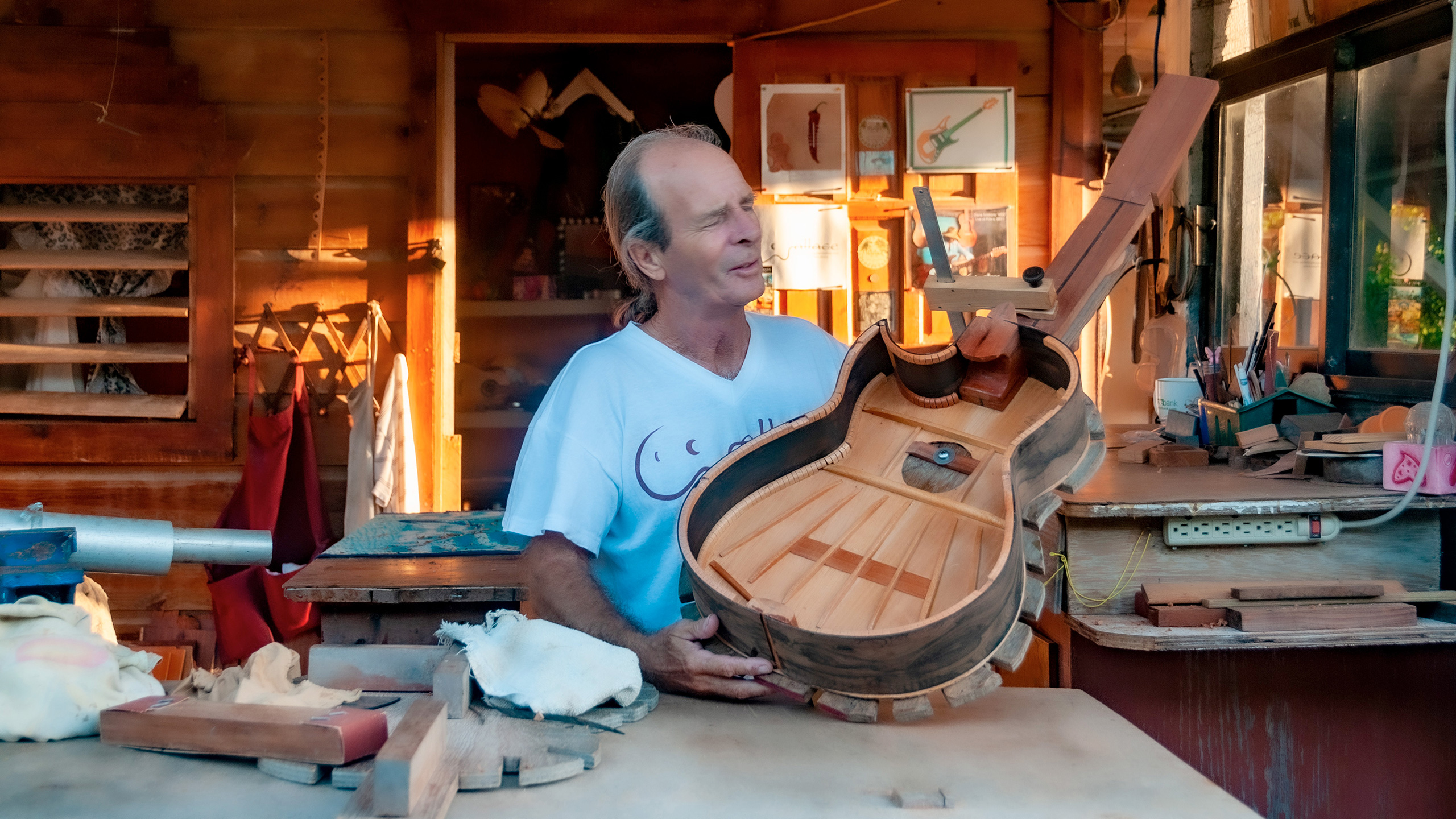
San Pedro, Belize was long an expat hippie hangout on the Gulf of Mexico, with a strong music culture from the 1960s. This musician immigrated from Canada in those years. When the inevitable happened and one of his instruments broke, he discovered there were no musical instrument repair people in the area, so he started repairing his own. And word got around. So it wasn't long until every other musician in town was coming to him for repairs, and not long afterward he started crafting new instruments, if I recall the story correctly. This is one type of base that due to cultural reasons is unlikely to ever be supplanted by big business.
Artisanal Foods
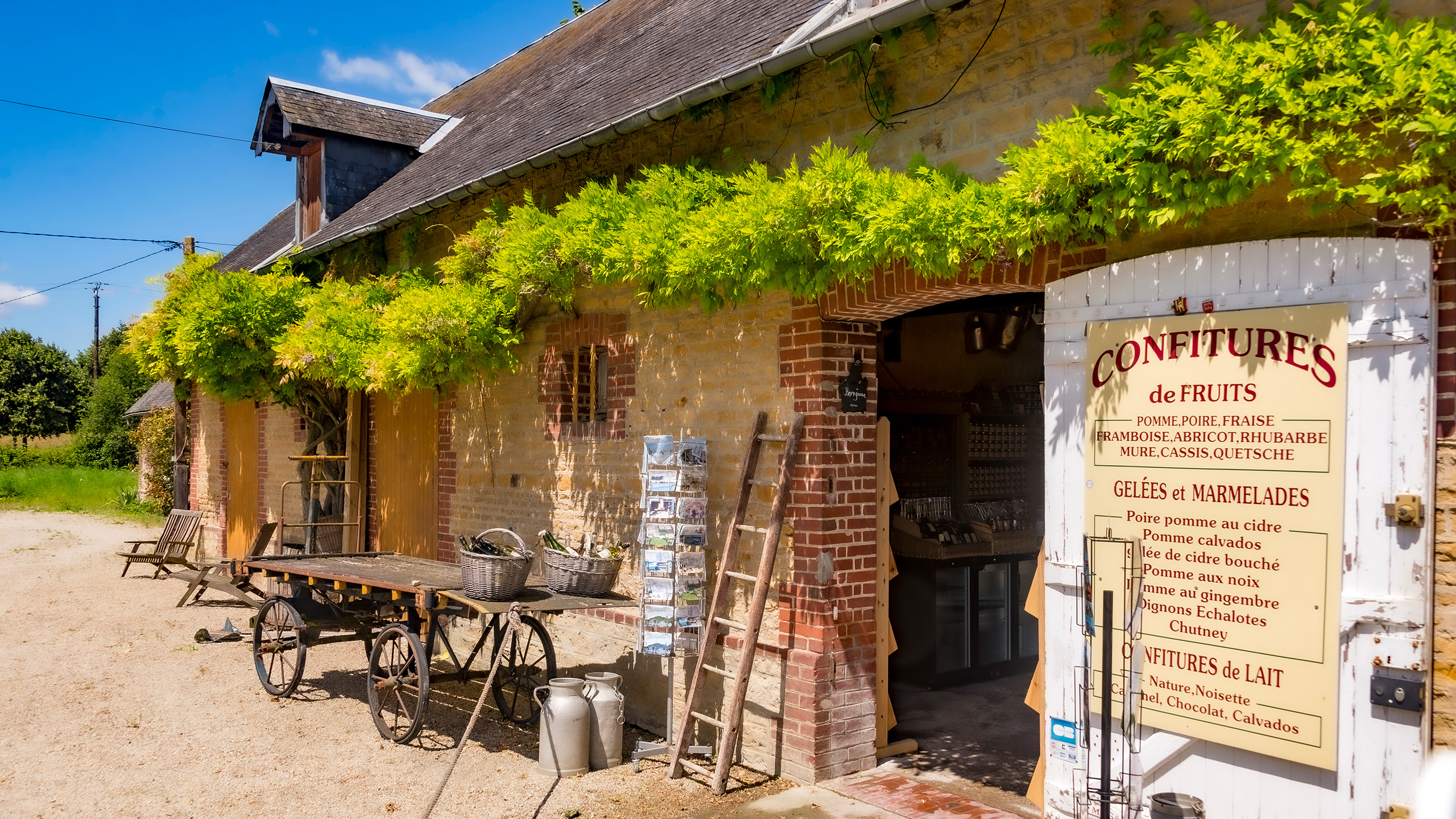
Local or regional artisanal foods are a curious base type. On a long-ago trip to a region of France known for its champagnes, we discovered that the big boys whose names are common in US grocery stores had massive industrial-scale vineyards, but we had little interest in products we could buy at our local grocery store. And from the look of it, most other visitors seemed to have drawn the same conclusion because the big-boy places appeared to have little retail presence, if any.
The small family vineyards, however, were a very different story; the vintner wasn't just present just inside the entry court, but would sit down with us and not only tell us about their wines, but also enjoy a glass with us. And we discovered that most of the champagnes we tasted were nothing at all like anything we'd ever tasted in the US. So unless there are people ill-advised enough to fly across an ocean to sample what's in their hometown grocery, artisanal foods are likely to hold up well in most places against the Industrial Food Chain.
Fishing
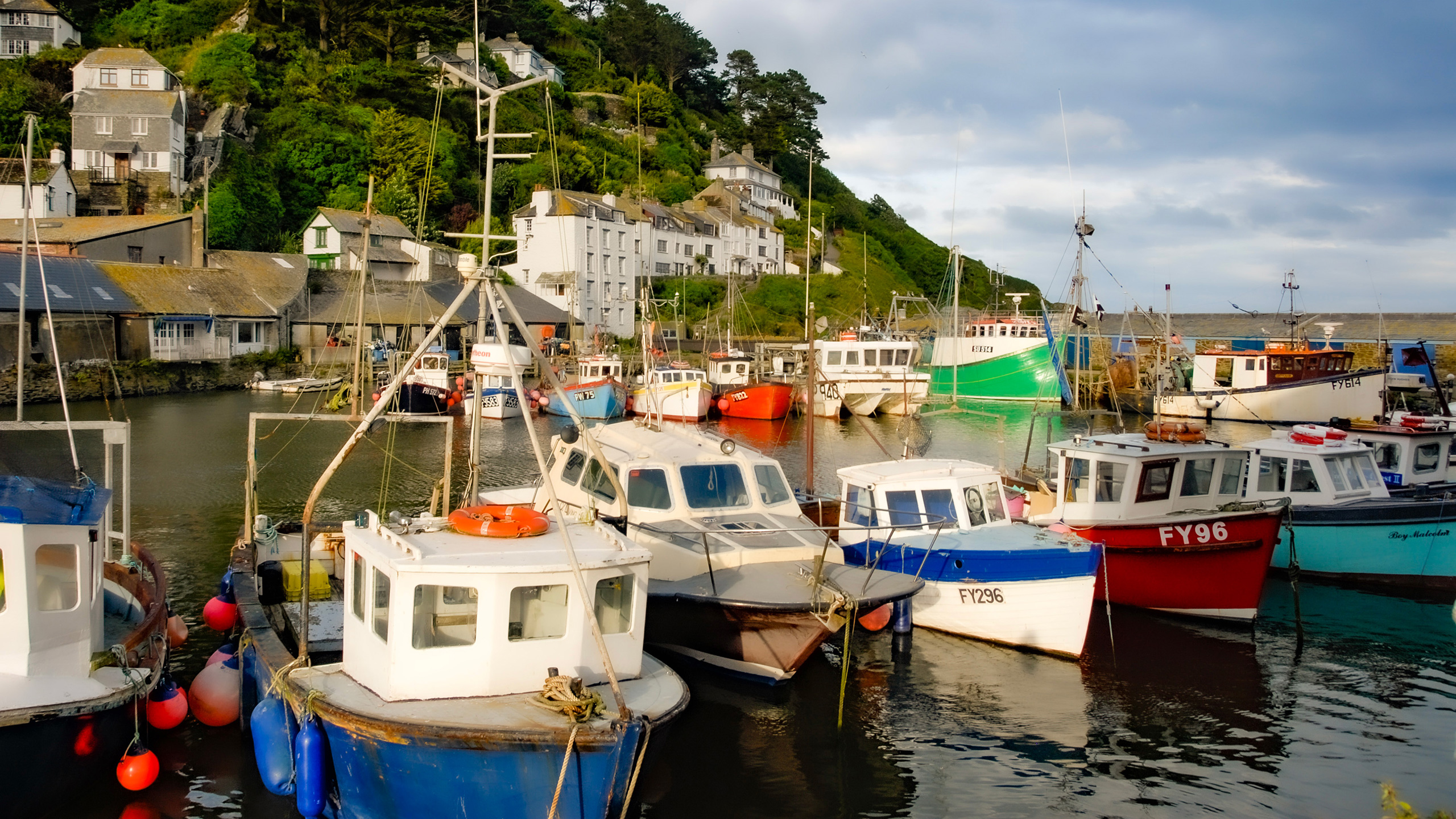
A fishing village has another curious base type, but for other reasons than artisanal foods because it has a two-headed customer type: those coming for the fish, and those coming for the fishing. In ancient times, the economic base of the fishing village base was typically the former, with their catch sold at nearby markets in the region. Now, with the Experience Economy in full bloom, most visitors want to go fishing themselves. And when you're selling experiences instead of products, industry has few ways to disrupt that.
Resorts
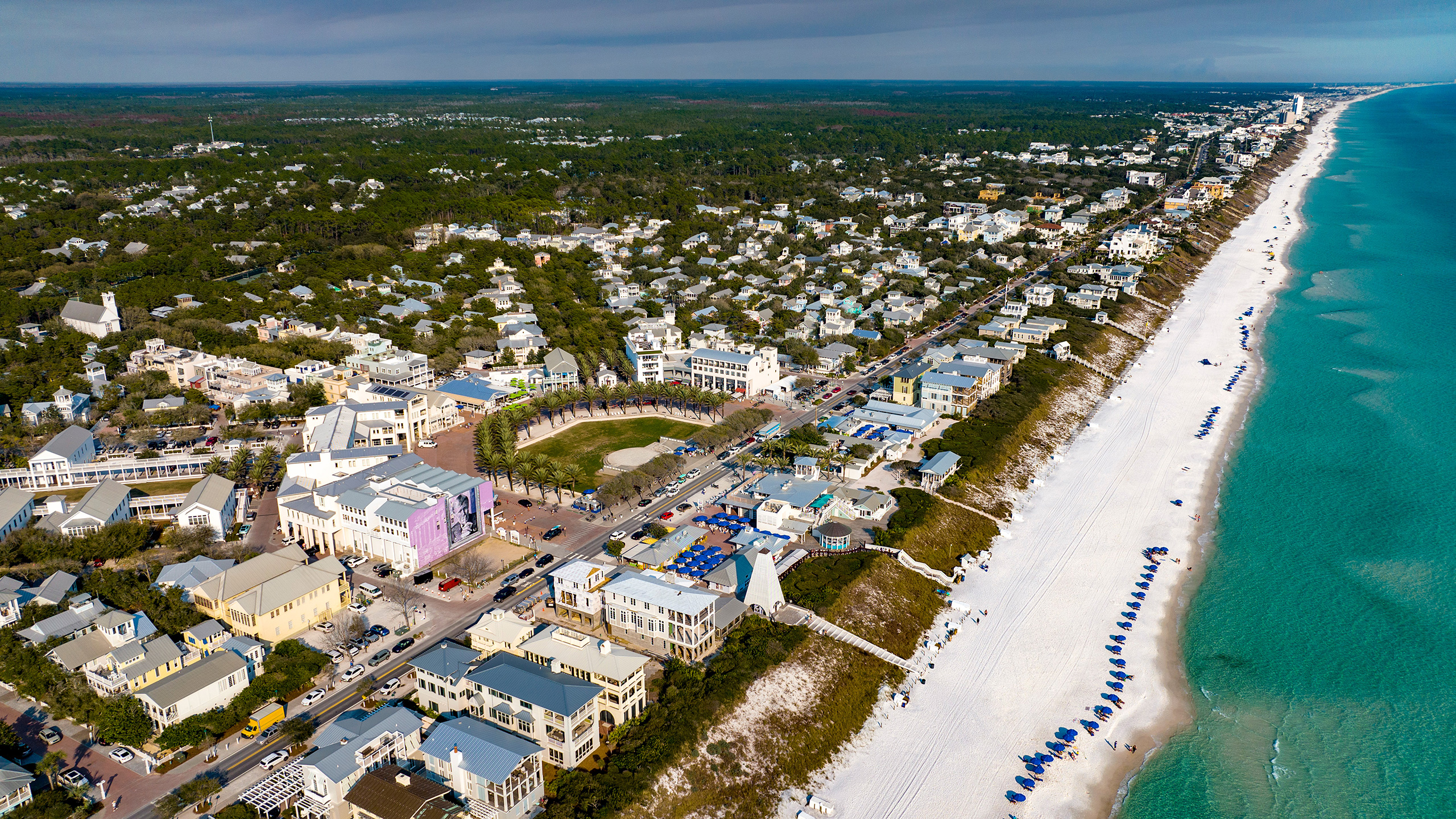
The resorts built after World War II tended to resemble hotels or casinos, in that they were buildings into which you entered and then (hopefully) enjoyed whatever their offerings were. And yes, there have been resort towns based on things like hot springs since antiquity, but Seaside was the first resort town built in the US in my lifetime. Or actually, the first town, resort or not.
Driving down US 331 in the early years, the "Come Build A Town With Us" billboards were mind-blowing because townbuilding had not occurred in the US since long before I was born. Yes, there were some similarities with Disney properties, but Disneyland, then Disney World were amusement parks, not actual towns, whereas Seaside is a town. So it became part of the Experience Economy a couple decades before the book was written, and many New Urbanist resort towns have followed similar patterns in the decades since Seaside's founding in 1981.
Tools For a Strong Local Economy
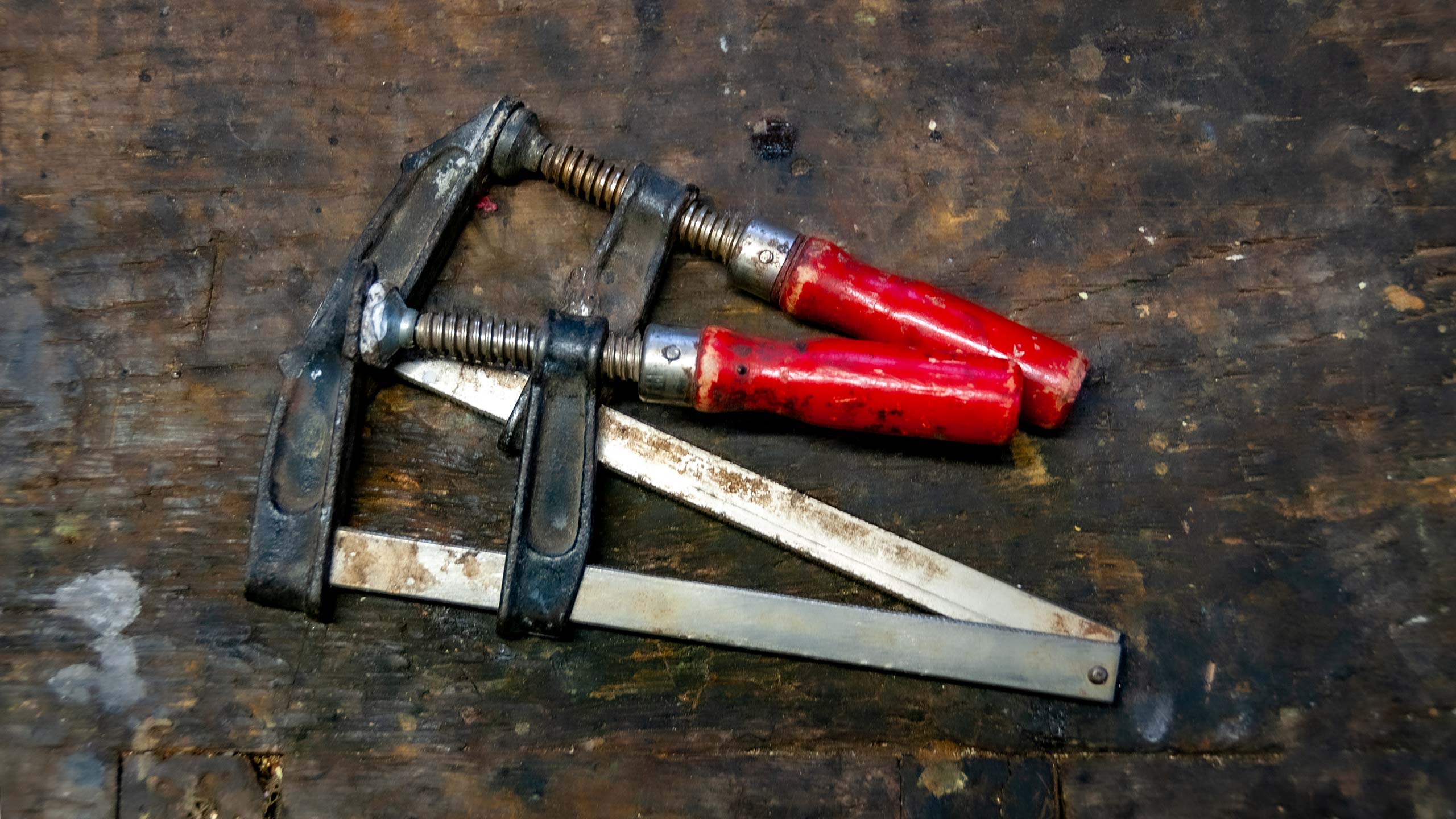
There are numerous tools for building and then bolstering a local economy, and they change substantially over time, with 2020 being a watershed year in which many tools evolved or emerged. The following are some of the most effective tools today, but keep your ear to the ground because this is a category where change recurs frequently.
Work-From-Home-Friendly Places
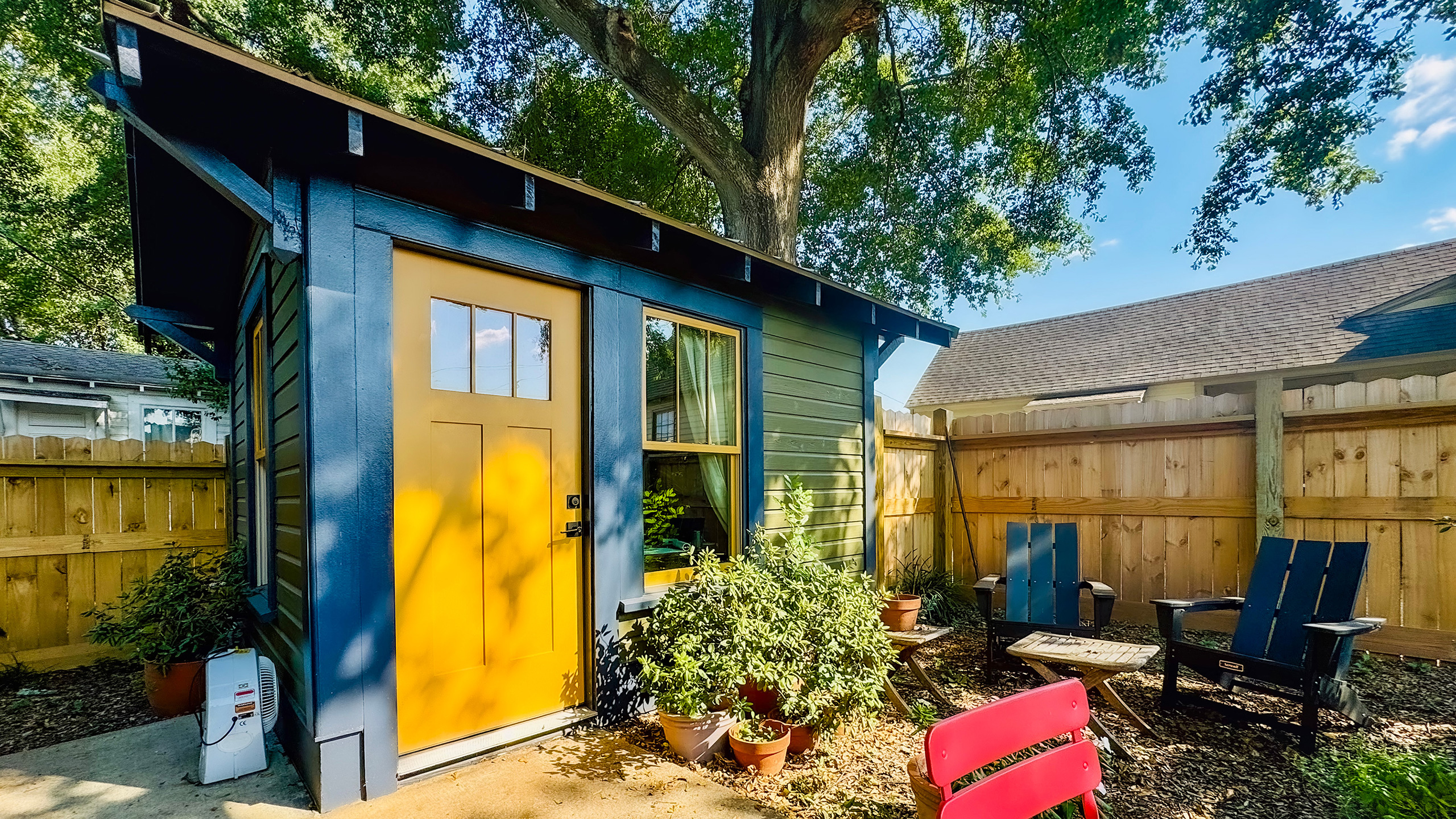
I have been working at least partially from home since opening my practice in 1991, with almost all my work except meetings taking place at home since 2020. My studio was a windowless, powerless tool shed when we moved in, but we renovated it into the most delightful place I have ever worked. And the fact it is so tiny puts everything right at hand, and makes it a high-caliber focus machine.
But how does working from home help build a strong local economy? Living in the City lays out cases for multiple settings, with issues both cities, their suburbs, and more distant country towns should consider, because working from home can be a local economic engine.
Nighttime Economy
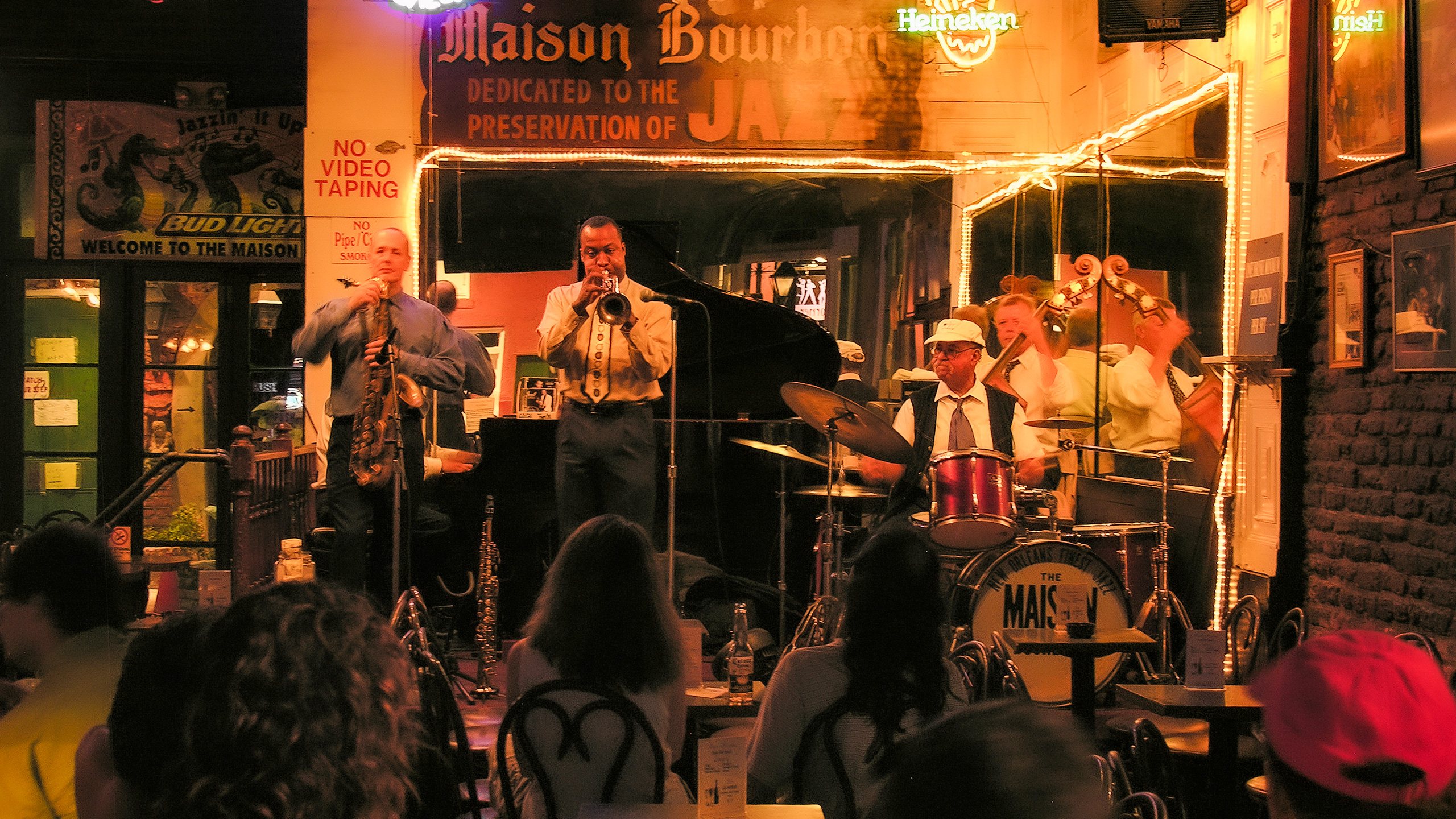
Depending on the character of the city itself, and who the visitors tend to be over different seasons of the year, a nighttime economy can be a significant contributor to the local economy. Some cities have substantial enough nighttime economies that they have a "day mayor" filling the role of a normal mayor and a "night mayor" managing affairs of the night. Take an inventory of your cities evening assets and its 24/7 branding to determine if you have potential for a nighttime economy or, if you already have one, in which directions it might grow.
Incubators
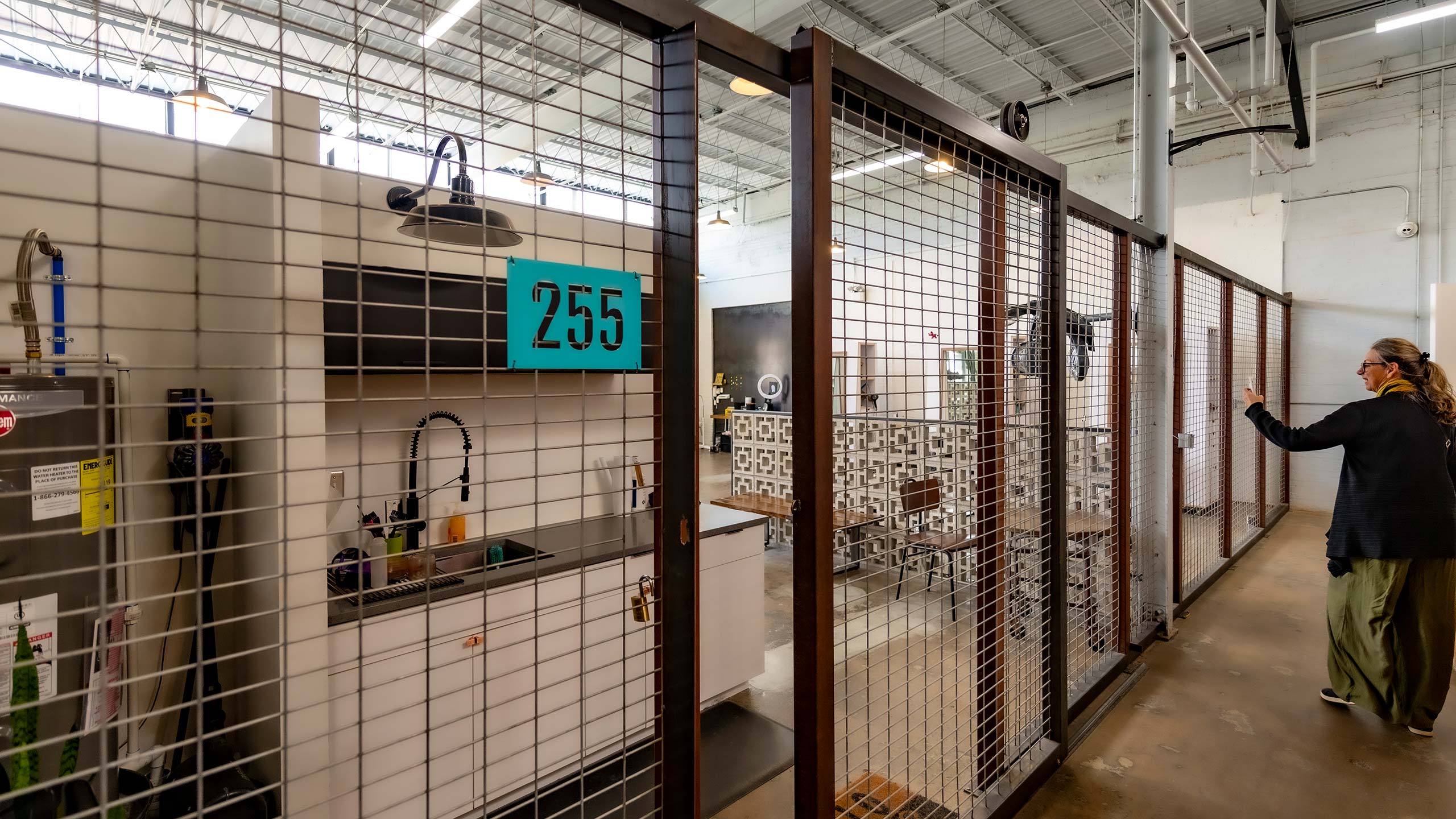
If your city is at all interested in grassroots economic development, incubators are essential. They have requirements similar to those of maker spaces: large, open, cheap, and wired. They can incubate a wide range of business types, or they can focus on business types identified by the incubator's manager. Almost all of them need meeting rooms, something akin to a food hall, and wet space for certain craft-based businesses that could involve materials like paint.
Pop-Ups
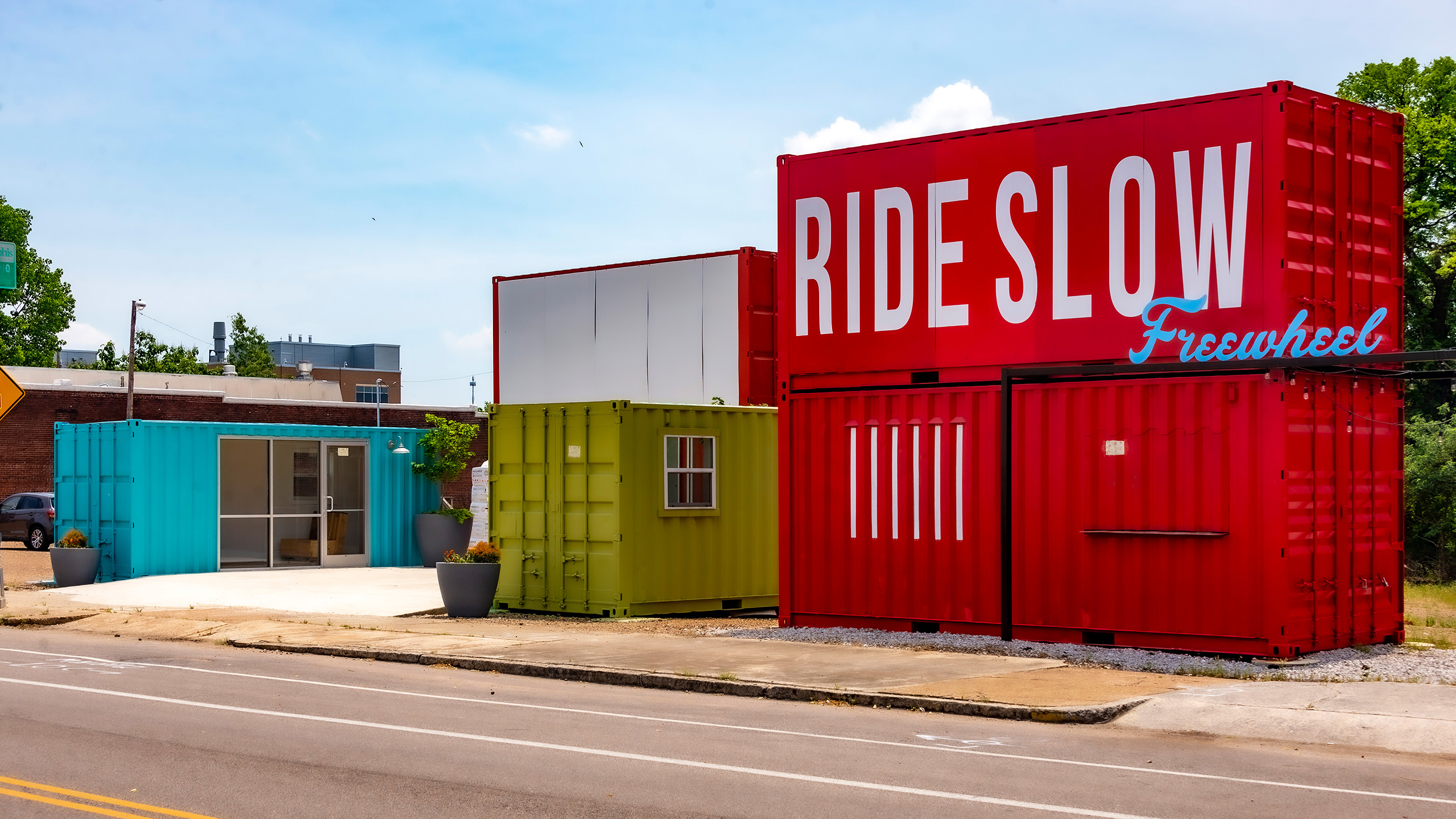
Pop-ups in general are pop up for a short period of time, and are considered a Tactical Urbanism tool. They can host a number of uses, but are most commonly used for retail, where they're usually referred to as "pop-up shops."
Pop-up shops can be located in mobile settings like these shipping containers, or they're often located in empty storefronts, where they can help reinvigorate a mixed-use street. I've been involved in one situation where they actually saved a building. Colleagues in Memphis asked what they could do to save the historic Tennessee Brewery, a jewel of a building just days from destruction. I wrote Ground Rules to Save a Building from Demolition (Part 1 of 2) in response, in which I recommended doing pop-up shops in just the first structural bay of the building (maybe thirty feet deep) to activate the street frontage, then use the rest of the building temporarily as mini-storage to help generate a larger revenue stream. The second part was Assembling a Cause to Save a Building from Demolition (Part 2 of 2) which set out to energize a larger community through New Media channels. And it worked! The building is now the keystone of a major neighborhood revitalization.
In short, this stuff works!
Tales & Tools
These ideas support the Prospering Society foundation of the Original Green. The Tales are on Original Green Stories, while the Tools are in Original Green Resources. Several of these ideas support other ideals, foundations, and the Living Tradition Operating System because the Original Green is massively interlinked, so you'll see them listed wherever appropriate.
Automobile Poverty - Part 1
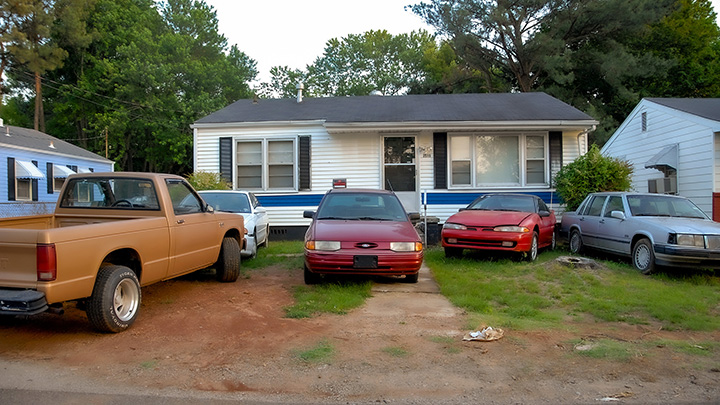
Our cars impoverish us in multiple ways, especially when living in sprawl where every resident of a residence must have a car to be economically viable. And they take more than money; the time we're required to spend with our steering wheels is time we could be spending with family and friends instead.
Cheapways
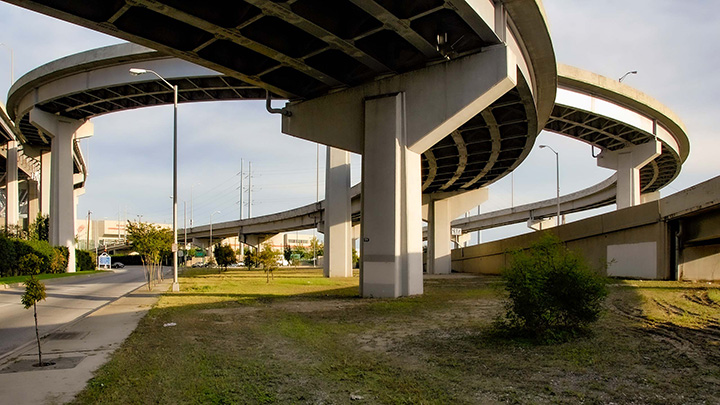
It's hard for a city to prosper if you destroy massive amounts of real estate value. The great destroyers were once known as freeways, but because of all the value they kill, they should be called cheapways because they make everything around them so much cheaper. Keep them out! Or if they've already invaded, tear them down!
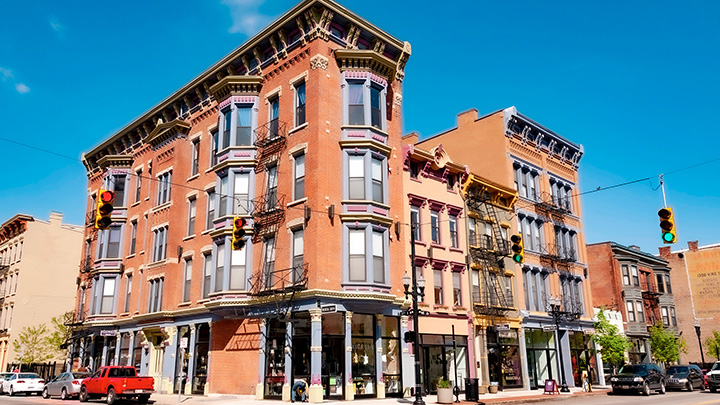
Declaration of Independence From Sprawl
The preamble closely follows that of the US Declaration of Independence but reverses the Original Green sequence to begin with healing. Places intent on prospering must destroy the sprawl Ponzi Scheme, which leads to bankruptcy. It is meant to be a foundational place document, reminding residents why decades later.
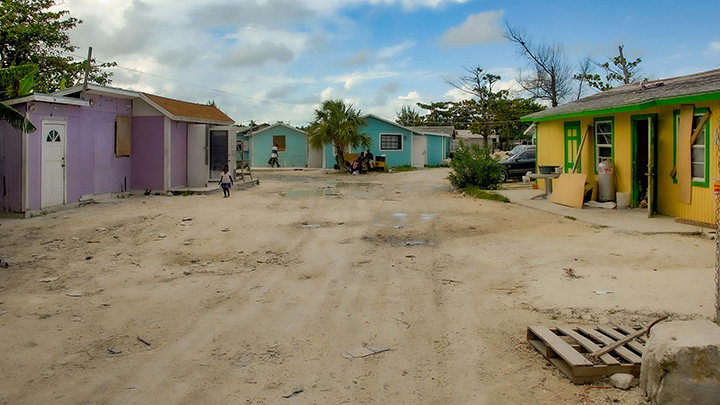
Disinvestment Recovery
Places suffering from long-term disinvestment walk a tightrope in their recovery process between growing prosperity and gentrification with displacement, so tools leading to prosperity are essential, but in modest measure so the place doesn't immediately blow up to the point that longtime residents have to leave.
Lean Urbanism
The Project for Lean Urbanism, hosted by the Center for Applied Transect Studies is an essential resource for a place seeking grassroots prosperity. It looks to lower barriers to entry for the small and disadvantaged with a top goal of Making Small Possible. Their Pink Zones are places where the red tape is lightened.

Outdoor Rooms
Wanda and I are writing a book on outdoor room design; those rooms have many benefits, including saving money by getting attuned with the local environment so we can Live In Season, so we can turn the equipment off and throw the windows open on the less extreme days of the year. And no equipment is so efficient as that which is off!

Outdoor Room Secrets
The previous post is on the outdoor room design book we're writing; this post contains many of the principles, tools, and techniques that led up to the book and that will be included therein. I call them "secrets," not because they're protected in some way, but because it's basic stuff everyone building outdoor rooms should already know.

Single-Crew Workplaces
A place looking to build a grassroots local economy instead of chasing industrial-scale operations that might not stay in town long are served well by Single-Crew Workplaces for two reasons: their tiny size means they can be distributed in a fine-grained way across town, and they give customers more choices in what to buy nearby.

Sky Method
Few development processes start smaller and mature their infrastructure more incrementally than the Sky Method, which was based on Pienza, Italy's history, where it evolved over centuries from what was essentially a large-lot Roman subdivision of family farms (1 acre each) to what is today a UNESCO World Heritage Site.

Sky Method Background
The Sky Method link above is to the initiative, which has a slideshow illustrating in detail how it works. This post lays out the the background from which it was developed, including the history of the method from antiquity to more recent centuries, and the curious name. What is Sky, anyway?

Smaller & Smarter
First published in Period Homes March 2012, this post lays out principles and practices outside of the ordinary that support construction that is both smaller and smarter, including expandability, double duty, light on more sides, outdoor rooms, and "silver bullets" with shocking savings. Implications beyond buildings abound.
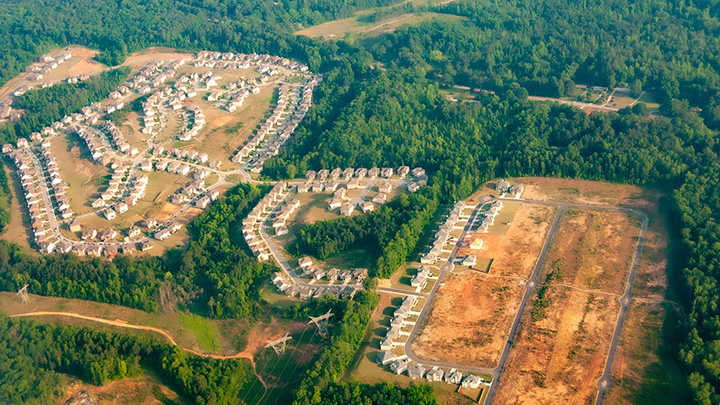
Sprawl Recovery
Sprawl is a great thief, producing a negative Return On Investment (ROI) wherever it's built, eventually bankrupting its host city, with the only question being how long it will take the city to fail. Recovering from sprawl is therefore essential if you want your city to be a prospering place, and it comes with many Original Green benefits.

The Ecological Dividend
Legendary Bahamian developer Orjan Lindroth laid out a fascinating formula he called the Ecological Dividend which can help a new town or neighborhood reap many financial benefits. The techniques and processes run the gamut of development practices, and are open to anyone committed to earning the Dividend.
The Long Tail of Housing Demand
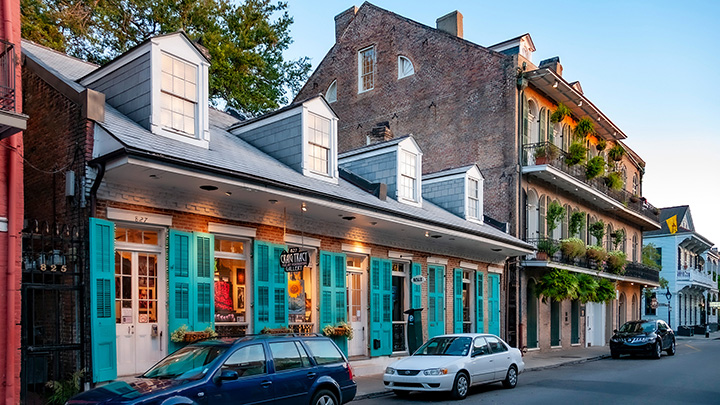
A prospering place performs better by having good balance in its offerings. Of all the things out-of-balance in towns and cities today, housing types are the most out-of-balance across the US with many places having only single-family homes and midrise condos. This post pulls some of the best market expertise on how to set things back in order.

The Luxury of Small
The myth that bigger is better shackles us in many ways, prodding us to slop up unlovable cheap junk fast that won't endure. A society prospers more fully, when served by buildings and infrastructure that are right-sized so they can be better-built for the same money for ages to come.

The Problem of Growth
Economic growth is considered healthy when it increases quarter-over-quarter, but this is one definition of exponential growth, which cannot continue unabated on a finite world. This is even more apparent when viewed through the lens of development, which in this case shows projected urban areas in Florida by 2060. After that, then what?

The Speed Burden
The land consumed because of the needs of our means of transport, like the walking and horse transport of Renaissance Florence on the left and a high-speed Atlanta interchange on the right is a huge indicator of potential prosperity of a city because an armature of low-speed streets creates a far higher return on investment than sprawl.

Tiny Places - Mike & Patty's
Single-crew-workplaces like Mike & Patty's where Mike serves and Patty cooks are keystones of grassroots prosperity because people can start building their dreams at a tiny scale, growing and also multiplying into multiple locations over time. We were able to help our oldest son start his first business this way.
Urbanism ROI
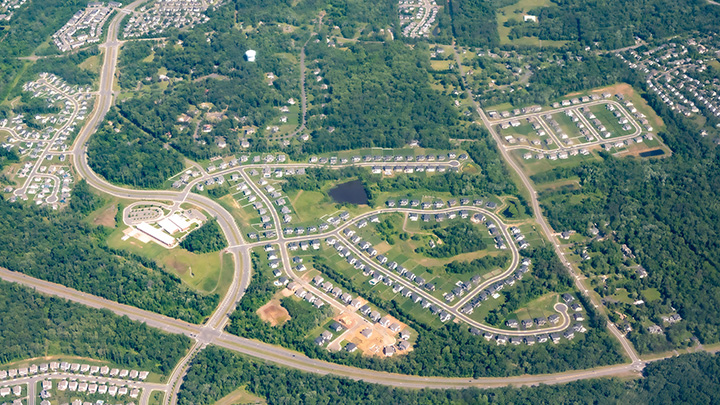
Charles Marohn of Strong Towns and Joe Minicozzi of Urban3 are the prophets of Urbanism ROI, which is essential learning for cities looking to prosper because sprawl never has a positive Return On Investment (ROI), and will eventually bankrupt every city fiscally dependent on sprawl's upfront revenue.
Search the Original Green Site
Buy the Original Green book on Amazon

Rather Buy Indie?
Contact Sundog Books at Seaside, which is our favorite bookstore ever!
Speaking
I speak on the Original Green across the US and abroad. Would you like for me to speak (via Zoom these days) at your next event?

Got an idea?
If you have an idea for a story, or know about work we need to feature...
Subscribe
... to receive periodic Original Green news releases. Here's our full Privacy Policy, where you'll see that we will not share your info with anyone else, nor will we sell it to anyone. All three fields required.
Home
Origins
Foundations
Nourishable Accessible Serviceable Securable Lovable Durable Adaptable Frugal Education Economy Culture Wellness
Resources
Original Green Scorecard Initiatives Presentations Reading List Quotes Links Tweetroll
Stories
OGTV
Media Room
Bios Press Speaking
© 2021 Mouzon Design, Inc.